February 25, 2021
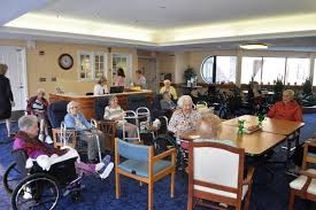
The AARP magazine in December 2020 focused an article on the tragedy of coronavirus deaths in long-term care facilities. The author pointed out that while “fewer than 1% of Americans live in such facilities, 40% of covid-19 deaths have occurred there. Age alone is not the issue because only about 15% of the population is over age 65. What is going on here?
Let us put aside the important question of whether it was smart or humane to send New York’s senior covid-19 patients to ill-equipped rest homes instead of the empty hospital ship that had been made available. What is the fundamental reason that so many perish in long-term care facilities compared to other residential choices? For example, the statistics are less shocking with the elderly who receive help to stay in their own homes home or even in assisted-living type housing.
As people age, they do tend to collect “underlying conditions”, but there is more to it than that. Over 1 year ago, as early as February 1, 2020, Bill Sardi helped us understand the importance of vitamin D for protection against covid-19 for all age groups. Sardi, and later Jeff T. Bowles noted that too often, nursing home residents do not get to go out in the sunshine and that a high percentage ore likely deficient in vitamin D. Of course, that idea becomes less practical in the winter. (But, if you have ever tried to get rest home staff to give dietary supplements to a patient, you know that is not an easy answer either.)
The mineral zinc is also critical for immune function. Several studies show that residents in these long-term facilities are malnourished and suffer functional problems as a result. Here is one example.
Also, I remember that when I was researching my book, The Probiotic Cure, I read studies which showed that because of inadequate diets, rest home residents typically had unhealthful balances in their gut microorganisms (dysbiosis). Dysbiosis alone can lead to “leaky gut” which in turn can cause virtually any health problem you can imagine.
It is not just the building itself or the staff in rest homes that cause the problem. Lack of independence is also a major difference. If an old person needs some visiting help but can stay at home and still make their own meals, they will be better nourished. They can also remain more mobile, get some sunshine and stay more cheerful. Other than the financial cost, I am at a loss for why there hasn’t been a massive effort to assure better nutrition or at least strategic nutritional supplements for confined elderly folks. SAD.
Meanwhile, if you have a loved one considering a rest home, it would be ideal to evaluate insurance, Medicare and various professional companies to see if it is possible to have them assisted with essential services in their own home. Or the next best thing might be an assisted living facility that allows some independence. At the very least, see if doctors on duty can be persuaded either by family or the family doctor to arrange for daily supplements of at least some critical basics such as vitamin D (e.g. 6,000 to 8,000 IU), zinc (30 mg.) and B vitamins to help with mood, balance and memory (e.g. Nerve Guardian). Most doctors have not studied nutrition, but you can provide them with a wealth of studies on each of these basics. For example, look for links to studies contained in these Library articles—on vitamin D and zinc. Note: the facility might require a pharmacist or the staff to pack the nutrients in a special packaging for ease of dispensing, but it could well be a lifesaving request.
 Healthy By Nature Show