Archive for the ‘general’ Category

Supplements—the good, the not-so-hot and the potentially ugly—Part 1

inform-mislead

In “Supplements—the good, the not-so-hot and the potentially ugly—Part 1” I begin to give the rest of the story on some recent supplement warnings. You probably know that nutritional and herbal supplements can be very beneficial. In two weeks, I will discuss some particular benefits; give a few pointers on their more effective use and suggest why supplements remain controversial.

However, it is clear that not every supplement is good for every person at any dosage and at all stages of life. That is one useful point made in the Consumer Reports September cover article. The magazine gives a list of 15 supplement ingredients to always avoid. The medical editor has admitted to a bias against supplements and the list is used in a way that seems designed to purposely paint a bleak picture. However, the list is a “teachable moment” as they say. So that this blog post doesn’t get too long, I’ll cover the 8 of the list this week and finish up the other 7 next week.

Aconite – Why was this item even on the CR list? Aconite is not used as a supplement. (Fun fact: in the past it was used to poison the tips of arrows.) One the 250 species was used (I presume very carefully) as a medicine in ancient Greece. But today, it is only used in homeopathic remedies. In homeopathic form, a toxic substance is safe and can be very healing. Is aconite on the list as a scare tactic or does it just reflect a lack of knowledge? Could be. I have run into pharmacists who do not understand the principles and dilutions of homeopathy and are freaked out by the starting material. See next item.

Caffeine powder – Everyone knows that you can overdose on espresso shots or NoDoz® and experience side effects like rapid or irregular heartbeat and even seizures. People who do not tolerate caffeine would probably know to avoid this ingredient. A homeopathic version of coffee (coffea cruda) works to calm a racing mind and do the opposite of the other symptoms caffeine can generate.

Green Tea Extract Powder – Green tea contains some extremely beneficial compounds such as EGCG. However, it does contain caffeine although less than coffee. Overdoing it can have the same issues as caffeine noted just above. The most common risk lies in not noticing that multiple sources of stimulants add up. An example would be combining a weight loss product, an energy drink and Mountain Dew (high caffeine content).

Chaparal – This herb is quite powerful and native Americans knew how to use it for cancer. It is anti-inflammatory, but, can have negative effects in the wrong hands and wrong dose. (The same can be said of most anti-inflammatory drugs.) I could only find one fringe company that even makes it. Chaparal is not commonly used except perhaps by a few master herbalists who know how to do so safely.

Coltsfoot – This is a rare supplement, but not impossible to find. It has been used for coughs, but there are many other choices that don’t pose a risk to the liver when used in high doses.

Comfrey – Do an online search for this and you will find salves and a very few extracts which can be considered supplements. But, look carefully, the labels say “for external use only”. One product comes up, “ComFree”, is actually an alternative to comfrey that contains none of the herb. Harmful to the liver? It could be, but the thing is, people are not swallowing it.

Germander – I had to really dig on this one to find anything except web pages warning not to use it. One obscure foreign male enhancement product apparently used to contain it in the past but no longer does.

Greater Celadine – You would have a hard time finding this, but if you did, caution is warranted. Dr. Ohhira’s Probiotics would be a much better choice for stomach ache.

To be continued…Meanwhile, we can avoid trouble by sticking to mainstream manufacturers with a reputation to uphold. Do not fall for the hype of fly by night sellers of particularly weight loss, body building and sexual enhancement products. Also, be especially leery of outrageous claims of overnight success. Those are often the fringe operators who are most likely to try sneaking pharmaceutical drugs into their products.


Dietary supplements really are regulated

factory

Considering the spin that the FDA and the likes of Consumer Reports give supplement regulation, a person might think it is risky to buy vitamins and other supplements in a health food store. However, I assure you that it isn’t the wild, wild West. Dietary supplements really are regulated. Ask any reputable on the radar manufacturer. They feel more than adequately supervised. In fact, they can even be vindictive. I know one owner who got a little cutesy with an FDA inspector and soon had visits from every local authority, the IRS, OSHA (safety), and even Alcohol Tobacco and Firearms (because he used a bit of vodka as a preservative in a sinus spray.)

As I pointed out in last week’s blog covering Consumers Report’s confessed bias against supplements, it would be patently ridiculous to regulate these food-like substances in the same way we do drugs. A person doesn’t need a prescription to buy a bulb of garlic, so why should we need one to buy garlic that someone has dried and put in a capsule? Pharmaceutical-type regulation would, in practical effect, take supplements off the market. Below is some basic information taken from a press release by the Natural Products Association. (I was once NPA’s president when it had another name.) These facts may help balance the scare tactics so often publicized.

  • Supplements are regulated by the Food and Drug Administration (FDA) as a special category of food. There are legal requirements for facility registration and the law requires use of good manufacturing practices (cGMPs) for sanitation and quality control. In addition to that, our Texas Department of Health also keeps a close eye on manufacturers and I believe that is true in most other states.
  • Dietary supplements have a fantastic safety record, especially when compared to medication and incidence of hospitalization from illness due to problems in the food supply. As we know, food can sometimes be contaminated. Periodically everything from spinach to peanut butter and ice cream are in the news. The safety record of supplements is much better than food in part because much of the process is automated and the ingredients are often dry and therefore less subject to spoiling.
  • Supplements are currently the only food commodity to require mandatory Serious Adverse Event Reporting (SAERs). Curiously, those requirements are the same or, in some cases, even more involved than those for potentially dangerous pharmaceuticals. The large numbers of complaints quoted by Consumer Reports is based on a mathematical estimate not an actual number of SAERs from the FDA. And, as I mentioned last week, it is highly likely that in most cases the supplement was just an innocent bystander to an event caused by another factor. That said, it is possible to use supplements inappropriately and next week I will offer some cautions.
  • The FDA also has strict requirements for how supplements are labeled. Companies get in very big trouble if the ingredient or dose in a pill is different than what is stated on the label. The FDA also tightly limits what a manufacturer can say about the supplement’s benefit. (That is why labels usually seem so frustratingly vague.) The Federal Trade Commission (FTC) has primary responsibility for regulating the advertising of supplements and sets a high bar for proof of claims.
  • If an ingredient has not been in commercial use before, there are very tough requirements for marketing it.

As I said, dietary supplements are regulated. New regulations are not needed, but the existing rules could surely be enforced more uniformly. For years, the NPA has called for full implementation of the cGMP regulations and has pushed for the FDA to be given more funding so that they could hire enough inspectors. The NPA has also fully supported government efforts to crack down on illegal drugs being marketed as dietary supplements.

So what is the big stink about? Most of us in the nutrition world think that the underlying problem is the amount of money being made in pharmaceuticals and the FDA’s close ties to that industry. The very idea that people can stay healthy or heal using non-patentable supplements is unsettling to the establishment.

Of course, there are shady operators on the fringe of any industry. For example, what could be more tightly regulated than the distillers of alcoholic beverages? And yet individuals still sell moonshine. The vast majority of supplements carried in responsible stores are safe and appropriately labeled. Next week I’ll discuss why supplements are being used more frequently even in mainstream medicine. I’ll also tell which ones to stay away from.

Consumer Reports is biased against supplements

FACTS.BIAS

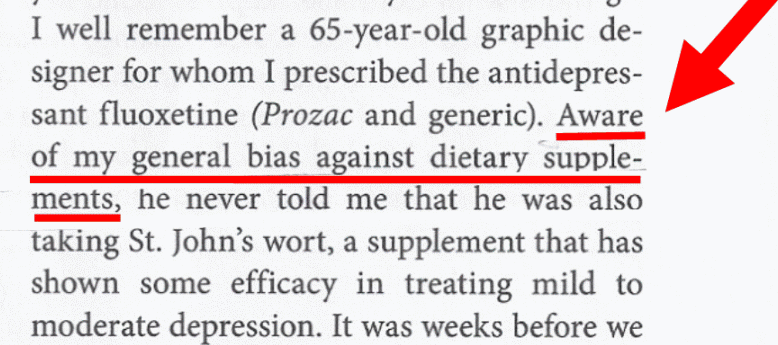
If you are a subscriber to Consumer Reports (CR) magazine, you may depend on their ratings of household items and automobiles. But, would you still trust their advice if they said they don’t approve of using dish soap, toasters or televisions? Before you believe a word of the new September 2016 issue about dietary supplements, you should know that Consumer Reports is biased against supplements. Don’t take my word for it…take theirs. The graphic below is clipped from one of their newsletters. An otherwise useful editorial about telling your doctor everything quoted their medical/nutritional expert, Marvin Lipman, MD as having a “general bias against supplements”. I give him credit for at least being honest (even if he does not seem to be open-minded and well-informed on this topic).CR bias clip

CR really should have repeated that as a disclaimer in this month’s magazine where they quote him in a massive irresponsible attack on supplements. They obviously worked very hard to paint an ugly picture and scare readers. It would take a several-page article like CR’s to correct all the misleading impressions the piece delivers. So, instead I’ll just list a few examples and some of the general ways they went astray:

  • The worst failing of this article is that it does not acknowledge the tens of thousands of scientific studies showing benefits from dietary supplements. (One of my sponsor’s ingredient has been the subject of over 700 studies!) It is just sad that they will not only frighten people away from using supplements that would improve their health, but also cause many to resort instead to pharmaceuticals with their usual high cost and proven side effects. If CR wanted to really help people, they would tell the story of magnesium—it is priceless and costs merely pennies per day. What drug can help reduce blood pressure, inflammation and cholesterol; improve depression, bone density, blood sugar control and constipation; fight migraines, muscle cramping and depression; and help normalize heart rhythms along with dozens of other benefits? Please read my newly revised article on magnesium with its updated recommendations. Even when CR says a supplement works (e.g. “St. John’s Wort may be as effective as antidepressants”) they still think you should take a drug instead of the safer supplement.
  • In writing my book on probiotics, I found many studies showing that probiotics save a great many babies from horrible infant diseases. And yet CR chose to start their article with a terribly sad story about a premature baby who died as a result of a probiotic. That supplement was apparently contaminated at the hospital and so the anecdote should probably have been put into a story about the dangers of medical error.
  • The magazine paints a distorted picture of supplement regulation. Nutritional supplements are indeed regulated–not only by the FDA, but also by states. Understandably, the requirements are different from those for drugs. For example, if a medication is a little bit off, that could possibly kill you…but a variance in the dose of vitamin C will not. We can buy a whole can of the spice turmeric at the grocery store. Should it require several years and a billion dollars’ worth of testing to justify selling the exact same powder in a capsule? (No company would do that because they cannot get a patent and therefore every other company could then sell the supplement without the expense.) There are cheaters in every industry. Responsible supplement makers (like our HBN radio sponsors) and their trade associations warmly welcome when the FDA cracks down on those few fringe companies who spike their products with drugs or take quality shortcuts. (Note that it seems the wrong kind of test was used in at least one highly-publicized “exposé” of supplements that supposedly did not contain what they claimed.)
  • Obviously, not everything natural is safe. For example, no one takes supplements of hemlock the plant poison used to kill the ancient philosopher, Socrates. However, CR had to s.t.r.e.t.c.h to come up with their list of “15 Ingredients to Always Avoid”. Most items in it are quite rarely used if at all or are used differently than implied. One has not been sold in decades except for topical use (Comfrey). Another (Kava) was mistakenly blamed for liver damage when the problem was actually careless use of the wrong part of the plant. With some others the issue is mainly one of being sure to follow instructions and respect dosage.
  • Incidents of harm are highlighted with scary high totals. First, I sure wish they had given this story a meaningful context by discussing the well over 100,000 thousand deaths each year due just to those drugs given as prescribed in hospitals. Secondly, we have to understand that when adverse events are reported to the FDA, that can just mean a pill got stuck in the person’s throat. Even with serious issues, there is no follow up investigation to determine if the supplement really was to blame or it just happened to be present along with to another problem. Don’t you imagine that if a doctor has a bias like CR’s Dr. Lipman, he or she might be quick to blame the supplement rather than one of their own prescriptions?
  • CR points out that store clerks don’t always give good advice. Nutrition clerks do want to help and generally speaking they do. However, surely a consumer must bear some responsibility if they press an un-credentialed store clerk for medical advice about a serious health concern.

My advice: Follow label instructions. See your nutrition-oriented health professional for advice about disease. Buy supplements from major brands that have proper quality control and a fine reputation to protect. Be especially careful with any product that claims to cause weight loss, build muscle or enhance sexual performance. That is the quick-fix territory where scam artists skulk about. Also, be careful where you obtain your nutrition information. Consumers Reports publishes actual testing results for toasters and the like, but when it comes to supplements, they seem to rely on opinions rather than extensive research data. So, at the least I think they need to add nutritionists and integrative doctors to their staff of writers and editors—folks who will look at the weight of science and practical successful applications, not just repeat outdated prejudice. By the way, I do greatly appreciate that the magazine has taken a strong stand in favor of labeling GMO’s.

Get more value from routine blood tests

blood draw

The purpose of the standard blood tests one receives along with an annual checkup is basically to detect disease markers. For example, some numbers will show if an infection or major immune issue is present. Others might hint that the liver is struggling or that the kidneys are headed toward shut down. The cholesterol measurements supposedly predict heart disease, but there is a lot of controversy around that one. What about nutrition and markers of optimum health and longevity? The standard test will pick up iron deficiency anemia and for the astute observer may indicate one measure of low vitamin B12. Otherwise, little is revealed about nutrition or resilience.

People are fooled when they see “calcium” listed. If that number is high or low it can indicate trouble, but that test isn’t a reliable way to know if you are appropriately nourished in the mineral. That is because the body is so good at balancing calcium for cellular function that it will eat up a rib or two before letting the blood get too low. Likewise, potassium can indicate a lot of things but not really whether you are eating sufficient fruits and vegetables.

Unless a number is extremely out of range or there are a bunch of numbers a little bit out of range, doctors may tell you not to worry about the results. I highly recommend the reference book Your Blood Never Lies: How to Read a Blood Test for a Longer, Healthier Life by pharmacist, nutritionist and popular HBN guest, James B. LaValle. This book will tell you in detail what might be causing a high or low number on your tests. You may well see a trend that the doctor has missed.

Unless you are blessed to have a nutrition-savvy integrative physician, you might need to ask for additional tests if you want to aim for optimum health. Below are some examples:

Blood sugar. In addition to heading off diabetes and its complications, maintaining stable blood sugar is a powerful quality-of-life strategy. That is because when blood sugar (glucose) is high, sugar glues itself to the proteins in our cells. That sugar-coating (“glycosylation”) is linked to disease, mental decline and premature aging. (For more info and positive steps to take, read my articles, Blood Sugar Spikes and Avoid Diabetes.) Doctors almost always test “fasting glucose”. That does indicate what our blood sugar happens to be the day of the test. However, the HbA1c test shows how sugar-coated our proteins have become over a period of months. (Ideally we want that number to be under 5.)

Vitamin D. Given the importance of this hormone-like vitamin to most processes in the body, some doctors now routinely test for it. But, you have to ask before the blood draw, because it may take a greater quantity of blood than what the tech would ordinarily collect. The proper test to order is “25-hydroxyvitamin D” test—also called a 25(OH)D. Labs vary greatly in accuracy as do the levels they call “normal” or within range. Many claim that a score of 32 is okay. However, most nutrition and vitamin D experts say to aim for a level of 50 to 80. My article on D.

Thyroid. If you don’t score in the healthy range on my thyroid quiz, you might want to make sure you are getting more comprehensive thyroid testing than the typical and most basic TSH (“thyroid stimulating hormone”). The doctor will know what to do if you ask for a complete thyroid panel. My thyroid article.

Magnesium. As noted in my article on magnesium, this mineral is needed in at least 300 reactions in the body. It is also widely deficient in the American diet and that sets us up for big trouble…including heart attack. If you don’t specify something else, most physicians will order a “serum magnesium”. That is a snap shot of what is circulating at the moment and may reflect dinner last night. That is not good enough. Ask for “Red Blood Cell Magnesium”. Even though it is not the ultimate test either, it will at least give a better idea if the cells routinely have what they need for proper operation.

Be prepared if there will be extra cost by asking what insurance will cover. There are nutritional services that test a lot more nutrients, but the tests above are a good start. Again, every home should have a copy of this book to make sense of all test results: Your Blood Never Lies: How to Read a Blood Test for a Longer, Healthier Life.

What if “Doctor’s Orders” are WRONG?

smoke evidence

Husband Bill was chuckling as he highlighted a phrase in the cautions paragraph of a medication instruction sheet. The phrase “Talk to your doctor” was repeated 9 times! Understandably, Walmart wants to make sure the customer knows all the dangers. What amused Bill is that we probably assume that doctors already know all those risks when they prescribed adrug…or do they? What if “Doctor’s Orders” are wrong?

Medicine has become so technical, complex, fractured and hurried that we really should take very little for granted. Here are three examples I recently stumbled across where the “experts” were off base. The situations can seem funny except that they can cause people to avoid treatments that would be helpful and that are often safer than more conventional choices.

  • Geniuses at an agency (European Food Standards Authority) of the European Union declared that producers of bottled water could not legally claim that water reduces dehydration. Article. Do you suppose this kind of nonsense is one reason that Brits recently voted to withdraw from the EU? (Even our often misguided FDA is not that bad.)
  • A recent review of studies is just the latest showing benefits of a gentle massage technique, “therapeutic touch”. In this case the benefit was for pain, nausea, anxiety, fatigue, quality of life and even biochemical measures—especially in cancer patients. I found that review while looking for an update to a Time magazine article from 1994 which quoted experts mocking the method as “New Age mumbo-jumbo”.
  • A newspaper headline from last fall says “Vitamins don’t stop polyps.” Researchers had looked at supplemental calcium and vitamin D. The calcium (a mineral not a vitamin) was given at 1,200 mg a day. If you read Death by Calcium: Proof of the toxic effects of dairy and calcium supplements or listened to my interview with the author, you will understand why calcium might be expected to actually increase the risk of precancerous polyps. (The scientists might have had better results giving magnesium, zinc or selenium.) As for the vitamin D, the dose was a mere 1,000 IU. That is probably not enough to get most participants into even the safe range, let alone to a therapeutic level.
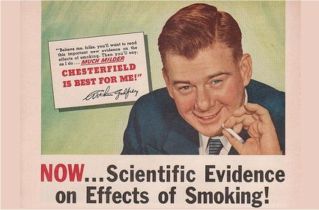
  • In the late 1940’s magazine ads claimed that more doctors smoked Camels than other brands and claimed that 20,679 doctors thought Luckies brand were less irritating. The ad shown above features entertainer Arthur Godfrey and a positive spin on the health evidence. The ad copy noted that scientists had checked folks who had smoked Chesterfields for an average of 10 years. They reported no damage to nose, throat or sinuses. Hmm…they didn’t mention looking lungs for cancer or emphysema which ironically is what killed poster boy, Mr. Godfrey.

We can’t believe all experts or discount them all. It does pay to remain a little skeptical and educate ourselves. Applying a little common sense helps as does educating ourselves. Getting a second opinion is also recommended. However, it is a good idea to get that opinion from a professional with a different type of training. Otherwise we are basically getting the same advice two different times. (I’m pretty sure that Dr. Google isn’t always right.) My guide to identifying a quack might be useful.


Build a strong complete supplement foundation

 block foundation72


Last week I met with several listeners for mini-consultations. They brought in their supplements for a review as I had requested. Apparently many did not know how to build a strong complete supplement foundation. Perhaps some of my observations about what was in their bags might be useful to others.

  • Many people were missing fundamentals. covers my thoughts on a basic supplement program. It includes vitamins and minerals that the body cannot make—they must come from the diet and/or supplements. Given how nutrients are depleted in today’s foods, a multivitamin-mineral is a good way to assure at least the bare minimums. In my article at this link about a basic supplement program, I say what to look for in a multi and give good and bad examples. In a recent blog, I highlighted a few benefits of one fundamental—vitamin C. Here is another benefit of the often overlooked vitamin: A recent large 10-year study of twins showed that the twin who consumed greater amounts of vitamin C was on average 33% less likely to develop cataracts. Study.
  • Some folks showed me several prescriptions. For example, one might have a drug for high blood pressure. However, if he had been taking sufficient magnesium, not only might he have avoided the prescription, he could also enjoy the mineral’s many other benefits. My favorite natural remedy for blood pressure is Kyolic Formula #109. (There are over 700 studies on Kyolic aged garlic!)
  • When I see calcium without magnesium, I cringe. While calcium is a necessary nutrient, it is already present in great quantities in the American diet. Calcium must be balanced with magnesium which is much less prevalent. Hormone imbalances, insufficient vitamin D and K2 are more common reasons for bone thinning than is lack of calcium. Bone-Up by Jarrow is my favorite bone formula in part because it contains the type of calcium actually used by bones (not ground rock which is basically what some popular brands are made of). It also contains a lot of bone nutrients that you might not think of like boron and zinc. (Bone-Up is widely available in stores, but I like to support my son’s business, HealthWorksMart.com when I can.)
  • I saw some forms of nutrients and supplement brands in which I don’t have much confidence. If a person isn’t trained in the differences, it is tempting to think that the only difference is price. With cars we understand that either a Rolls Royce or a Mini Cooper will get you were you are going. However, the same is not necessarily true with supplements. Some Brand X knockoffs can even be dangerous. Mostly the “bargain” brands are often not really a good value because they may not deliver good results. Unfortunately, their failure may not show up for many years. Take resveratrol as an example. The type of resveratrol and combined ingredients in Longevinex has been shown in studies to reverse macular degeneration and perform other wonders outlined in my article at this link. You can buy something at COSTCO labeled as “resveratrol”, but it is synthetic and may not provide anywhere near the benefit.
  • Several listeners said they were working on yeast overgrowth. That is a common problem and a worthy project. But, in addition to probiotics and oregano oil, it is crucial to remove sugar and most starch from the diet. Why try to kill yeast and yet at the same time give these yeastie beasties their favorite food?

Information overload?

diet books

If we are better informed about health, we obviously can make better choices. Back 34 years ago when I first got into the nutrition field, there were just a few places to go for information about natural medicine and supplements. As recently as 19 years ago, when we started the radio show, I was still scrambling a bit to find good spokespeople. But, these days a massive number of physicians have become advocates of functional medicine. There is also a veritable flood of research data and so, I now have the opposite problem. Then of course there is the internet—the great (mis)information highway.

I was reminded of this information issue when I decided to change the way I store my personal collection of books—switching from health categories to alphabetical by author. I’m also putting them to a spreadsheet so that I can search by title and key words. Why all this trouble? It’s because I have well over 800 books! Below are some thoughts going through them has generated.

  • Some authors perform a great service by researching exhaustively, writing with passion and balance. For example:

Naturopaths Joseph Pizzorno and Michael Murray wrote The Encyclopedia of Natural Medicine Third Edition, a wonderful reference that no home should be without. Their Textbook of Natural Medicine should be required reading for every doctor.

Some call our attention to the need for a nutrient. For example, lives have been saved by Could It Be B12? and Vitamin K2 and the Calcium Paradox.

Others save lives by warning us not to overdo nutrients—for instance, Dr. Levy’s Death by Calcium and Bill Sardi’s Iron Time Bomb. (It is now out of print, but I did find this article.)

Any book by Sherry Rogers, MD is a good bet because she supports all her recommendations with scientific studies.

(I don’t pretend that my work is in the same league with most of those above. However, I can say that I put a ton of work into Natural Alternatives to Nexium and The Probiotic Cure.They are based on many hundreds of studies and have been blessed with good reviews.)

  • Sometimes authors are so far ahead of the parade that they are ridiculed. Robert Atkins, MD is a case in point. He wrote Atkins’ Diet Revolution in 1972. What he was saying 44 years ago about the obesity, diabetes and heart disease problems with starch and sugar is now “big news”.
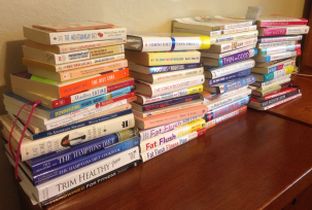
  • The photo above is of 62 weight loss books I have in my collection. Many of my other books have at least chapters on weight loss. (You’d think after all those words we would have solved the problem. Perhaps if we’d listened more to Dr. Atkins and less to the government, we’d be closer to a solution. )
  • David Reuben, MD had a good idea. (No, I don’t think it was the namesake sandwich.) In his 1975 work, The Save Your Life Diet, he said that we could lower cholesterol and body weight with fiber. I was shocked to see that 4 decades ago he was also talking about fiber being food for our good bacteria—again, big news in research today. I do have 2 issues with his recommendations. (1) He gave the impression fiber was about all we needed and (2) giving the impression that everyone can tolerate wheat bran.
  • Some authors go on a crusade, but their ideas are later disputed by science. For example, I have 2 books on the evils of coffee. Coffee has now been shown to reduce the risk of diseases such as diabetes and colon cancer.
  • I MUST slim down the load on my overcrowded shelves. So, I’m getting rid of:

Books that were written just to promote a product in which the author had a financial interest

Vanity books written mainly to promote the writer’s celebrity

Books without original ideas…ones that say the same things that many others have, but not as well.

When I’m finished with this project I will still have too many books.

We miss out if humble vitamin C is under-appreciated and under-used.

??????????????????????????????????????????????????????????????

Sometimes it is easy to become so enamored of the latest and greatest high-tech supplement that we forget about the basics. That is unfortunate because those fundamentals may be even more important to our health and are often less expensive. For example, we miss out if humble vitamin C is under-appreciated and under-used.

During our May 28th interview with Bill Sardi, he discussed renewed research about the role of our old friend vitamin C in fighting our old enemy, cancer. That is heavy lifting indeed, but there are a number of more routine uses for vitamin C.

  • The effects of aging. Even though it was an animal study, it is very interesting that vitamin C was found to be rejuvenating and even helped repair DNA damage. It is noteworthy that mice have the ability to make their own vitamin C (we cannot), but apparently adding even more helped. STUDY
  • Endometriosis. This is a serious condition especially affecting women of reproductive age. In an animal study, supplemental vitamin C significantly reduced problems with experimentally induced endometriosis. STUDY
  • Others: There are many other vitamin C benefits supported by science: athletic performance, bronchitis, colds, fragile capillaries, glaucoma, gum disease, high cholesterol, infertility, sore throat, stress, and wound healing…I could go on but you get the idea.

How much vitamin C is enough?

It is a challenge even for a nutritionist to sort out the government’s various guidelines: “Recommended Dietary Allowances (RDAs)”, “Adequate Intakes (AIs)”, “Daily Value (DV)” and “Dietary Reference Intakes (DRIs)”. Even if we figure out which one to use, I have little to no faith in the numbers. That is because the goal of the guides is to prevent deficiency diseases—not to optimize health. Also, they do not reflect our unique biochemical differences. Besides the government’s long-standing built-in bias against supplements, there is political pressure to specify low amounts because the guidelines influence public policy. That said, these experts do come closer to getting it right in their recommendations for minerals than they do with vitamins.

The DV for vitamin C is a mere 60 mg and that includes what is in food. For example, that is about the amount in an orange. At that level at least we won’t likely get scurvy, that ancient sailor’s disease. Bill Sardi wrote an interesting article on how effective very high amounts of vitamin C can be for treating cancer. What treats cancer naturally may well be preventive. Considering that and the above benefits of C, it might be smart to take more than 60 mg. Many nutritionists that I know recommend 500 mg twice a day because the vitamin is water soluble and flushes out of the body.

  • Recent research showed that 75 mg a day was not sufficient to maintain what is considered “adequate” blood levels. STUDY
  • But, what about the risk of kidney stones? End stage kidney disease patients on dialysis did not seem to have an increased risk of stones, even with vitamin C at blood levels expected to be therapeutic for healing wounds and forming red blood cells. Note: those levels may be 3 to 4 times more than what is considered “adequate”. STUDY

Myth versus science

lincoln

While the above graphic is chuckle-worthy, it is horrifying how many people believe everything they read on the internet or see on TV. However, even very intelligent and cautious people can be misled when they receive misinformation from their doctors and other supposedly credible sources. The trick to separating the gluten-free grain from the chaff is seeing if there is factual proof of what may only sound plausible. It is a matter of myth versus science.

Too often the truth becomes unrecognizable because it has had so much self-serving spin wrapped around it by vested interests. That was the case with the disastrous USDA food pyramid of a few years ago. It was not a product of science, but rather the work of lobbyists for the food industry. (The pyramid base was starchy foods and I nicknamed it the “obesity/diabetes pyramid”).

With medical information, a factoid may look only at some midpoint finding, not the end result that we assume. For instance, a drug or diet plan may indeed reduce blood cholesterol in a certain group of people. And yet it may have no impact whatsoever on preventing heart attacks or on saving lives.

Here are a couple current myth-busting examples:  

Disinfecting

The theory: Bleaching the heck out of everything at home (or school) should reduce the incidence of disease. (Chlorox brand brags about this idea on their website specifically noting the idea it will reduce cases of the flu.)

What the science shows: Over 9,000 children 6-12 years of age from various European countries were studied for one year. The researchers compared rates of influenza, tonsillitis, sinusitis, ear infections, bronchitis and pneumonia with the use of bleach at home for sanitizing. It turned out that greater use of bleach resulted in 20% more cases of flu, 35% more tonsillitis and 18% more recurrent infections in general. STUDY

Possible explanation: The extra sanitizing may have killed protective organisms along with those that might cause disease. And/or the sanitary conditions prevented kids from exposure to very small amounts of a virus thereby making their immune systems less prepared if they accidentally encountered a large amount of pathogen (like being in range of a sneeze).

Low Fat Dairy

The theory: Virtually every diet recommendation we hear from dietitians mentions that we should use low-fat or even fat-free dairy. They claim to be protecting us from calories and the “evils” of saturated fat and by extension from obesity and heart disease. Given the massive number of low-fat products at the typical grocery store, Americans have apparently believed what they said and voted with their dollars.

What the science shows: We now know that the scant science on fats (even saturated fat) was shaky at best and we have had it all wrong. One recent study showed less weight gain around the waist in men who ate full fat dairy. STUDY. A review of several studies showed less risk of obesity and cardiovascular disease with high fat dairy. STUDY. It was always at least hinted that fat in the diet contributed to bad skin. However, interestingly, a study showed that skim milk was more significantly associated with acne than full fat dairy. STUDY.

Possible explanation: For one thing, fat satisfies appetite and so, in its absence, we eat more food. Also, sugar is the real villain and the reduction of fat led to an increased intake of sugar. Finally, there are beneficial substances in fat and we usually seem to get in trouble whenever we start processing whole real food to remove parts of it.


Ways we can protect some hard won freedoms

flagbill

Memorial day rightfully honors those who died fighting for our free country. But, “Eternal vigilance is the price of liberty” as Thomas Jefferson said in the 1800’s. That is still true today and we all have a role to play in preserving what they paid the ultimate price for. Even in the health world, if we assume someone else is looking out for us we might be in for an unpleasant surprise. That is because bit by bit our freedom to choose the type of healthcare we want can be nibbled away by legislation and regulation. The Food and Drug Administration has shown a clear bias in favor of pharmaceuticals and mainstream medicine over natural approaches. The pharmaceutical industry and medical trade associations lobby very hard to denigrate natural therapies such as supplements, homeopathy and herbs. They have an obvious vested interest in maintaining the status quo. (It is a perversion of the Golden Rule…he who has the gold makes the rules.) Here are some examples of current issues and easy steps that can make a difference:

Health Savings Accounts (HSA) and Health Flexible Spending Accounts (FSA). Shouldn’t we be able to use these accounts on whatever methods and materials we think will do the most good for our health? And there are lots of studies showing how much money can be saved on healthcare with prudent use of supplements. Tell your Senators and Representative to support legislation which would allow Americans to use their HAS and FSA dollars on dietary supplements. (Next we should ask to make supplements tax deductible—costs of medicine for disease are.) LEARN MORE & TAKE ACTION

Government subsidies for the needy. I think it is simply insane that benefits OF SNAP (Supplemental Nutrition Assistance Program which used to be called Food Stamps) can be used to pay for soda pop and candy but a hot rotisserie chicken or multivitamins. Hopefully, that will be addressed soon, but there is already a similar program that we can weigh in on. Tell your Senators and Representative to support legislation that directs the USDA to consider making multivitamins eligible for purchase under the WIC program (for Women, Infants and Children). LEARN MORE & TAKE ACTION

Military access to supplements. There is a move afoot to add regulations that will make supplements harder for military personnel to buy in government stores. Tell your Senators to vote NO on any dietary supplement specific amendments to the FY 2017 National Defense Authorization Act. LEARN MORE & TAKE ACTION

The biggest problem may just be ignorance. The drug companies, the medical establishment and insurance companies can well afford to make sure that Congress knows their story and concerns. However, consumers, nutritionists, researchers and supplement makers do not have that kind of access to showcase the value of nutritional supplements. Senators and Representative can become better informed if they join the Congressional Dietary Supplement Caucus. LEARN MORE & TAKE ACTION

STATES CAN BE A PROBLEM TOO           

In Massachusetts there is an assault on supplements. If you live in MA, tell your State Legislators to OPPOSE H.3471. LEARN MORE & TAKE ACTION

Puerto Rico aims to suppress supplements with regulation and fees. (It seems to be mainly a money grab.) If you live there, tell your representative that any legislation addressing Puerto Rico’s debt crisis MUST include language striking Administrative Order No. 346. LEARN MORE & TAKE ACTION

Best wishes for a safe, fun and meaningful Memorial Day.


Healthy By Nature Show