


 April 19, 2018
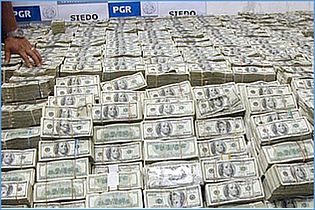
This irony is a bitter pill. (Pardon the too-easy pun). Dietary supplements are routinely bashed as “unproven”. No amount of epidemiological (population) evidence; hundreds of studies or thousands of consumer reports (testimonials) can convince the critics. What the medical experts claim to need is called by the reassuring name “evidence-based medicine”. That jargon means show studies that have proven that such and such (nearly always a drug) is safe and effective. Okay. Sounds good…assuming that the studies are unbiased and thorough. As it turns out that is not a safe assumption!
We’ve known for a long time that the pharmaceutical industry had too much influence with the Food and Drug Administration and Congress. (There are more than twice as many drug lobbyists as elected officials.) And, well, there is also a problem with state legislatures and state medical regulators. Oh, and then there are doctor’s offices. (Have you ever seen a vitamin C rep bringing lunch for the medical staff or delivering a commission check?) But, at least the studies are science and therefore good, right?
The quotes below are from a wonderful article about corruption in the conduct and publication of studies:
- “Richard Horton, editor in chief of The Lancet said this in 2015…much of the scientific literature, perhaps half, may simply be untrue. ”
- “Dr. Marcia Angell, former editor in chief of NEJM [perhaps the world’s most prestigious medical journal] wrote in 2009: It is simply no longer possible to believe much of the clinical research that is published, or to rely on the judgment of trusted physicians or authoritative medical guidelines. I take no pleasure in this conclusion, which I reached slowly and reluctantly over my two decades as an editor.”
- “ Dr. Relman another former editor in chief of the NEJM said this in 2002: “The medical profession is being bought by the pharmaceutical industry, not only in terms of the practice of medicine, but also in terms of teaching and research. The academic institutions of this country are allowing themselves to be the paid agents of the pharmaceutical industry. I think it’s disgraceful.”
- While I was being interviewed for a podcast hosted by Ronald Hoffman, MD (a doc I greatly respect) we discovered that we both wrote blogs along the same lines at about the same time. Click here to read his blog and discover the important resources he offers.
Examples of the issues:
- A review paper in the NEJM found that the osteoporosis bisphosphonate drugs (e.g. Boniva) were only rarely associated with fractures. That is not the case and it is scandalous that this “article” was published as scientific fact rather than labeled an advertorial. It should have been a clue that among the article’s sources were doctors that were paid big consulting fees by the drug companies and that three of the authors were full time employees.
- More than ½ of the editors of medical journals have been shown to be on the take from drug companies. As Medium.com states in the article, “Each editor of the Journal of the American College of Cardiology received, on average $475,072 personally and another $119,407 for ‘research’. With 35 editors, that’s about $15 million in bribes to doctors. No wonder the JACC loves drugs and devices.”
- Studies done by industry have been documented to have positive results much more frequently than those completed by independent parties. Oh, by the way, over 60% of drug studies are done by the manufacturer. Think they might have a bias?
- Almost 1/3 of trials showing no benefit of drugs are abandoned. (Perhaps to fudge the study guidelines for a better showing.) Even completed studies, if unfavorable, are not likely to be published. (The companies hide them even from their buddies at the journals.)
- Until 2000 when the government applied restrictions, companies would do a bunch of studies without saying what they were even looking for. When they found something that seemed to work, then they’d announce the goal. According to medium.com article quoted herein, “Prior to 2000, 57% of trials showed a positive result. After 2000, a paltry 8% showed good results.”
Talk about fake news! To us mere mortals and even to dedicated doctors, the drugs appear to be much more beneficial than they are. Ignoring the fact that there is a con game running, anyone skeptical of the “science” is mercilessly belittled.
Whom do we blame? Well, the problem is NOT the drug industry. Their sole job is to serve their stockholders. That means they should make their products look good and sell them by whatever means is necessary. They are not public servants. As further evidence, I cite a CNBC article. It quotes Wall Street as callously advising that it is not a good business model for companies to develop a drug if it cures a disease permanently. What they love are drugs like statins that people can be instructed to take the rest of their lives.
So, if it not the drug companies, who is at fault? Universities, government and the medical journals must root out the corruption. (But who will do that since they are all on the take?) Doctors need to be legally prevented from earning commissions on drug sales. (Again, who can do that who isn’t compromised by the same corrupt system?) As consumers, we can significantly reduce the problem by finding natural non-pharmaceutical ways to prevent and reverse disease. By not using the system, we can drain its life blood–money!
Quotes for the week
“Follow the money” from the movie All the President’s Men
“Show me the money” from the movie Jerry Maguire
 Healthy By Nature Show
1993 President Clinton authorized Big Pharma to donate over $50 million to the FDA to approve Drugs wether tested or not
Not surprising. I like a free market, but maybe not for things where you have no way of knowing it can kill you. Thanks.
Excellent. This is why I say that there will never be a drug cure for cancer or other diseases because that will kill the goose that lays the golden egg. I wonder if the FDA does any studies on the long term affects of these drugs. All the back room deals and payoffs by Big Pharma is highly competitive with the corruption that goes on in Congress.
Indeed. This is why I do what I do. It is going to take a revolt by consumers.