Archive for the ‘general’ Category

Bill Sardi answers listener questions

Last week I said that I might start the show by asking about some of the recent studies Bill Sardi has called to my attention. Well, that didn’t happen because the phone lines filled up so fast. (Newsletter subscribers know what’s coming and can be at the head of the line.) Here at least are links to those topics we didn’t cover: Vitamin D and Cardiovascular Risk Factors (low D levels = high risk factors); Cholesterol Drugs (may add just 4 days of life); Fish Oil During Pregnancy Reduces Risk of Diabetes in Offspring.

Bill Sardi, agreed to answer random listener questions. (I hope to do this once a month.) He is a prolific author, science investigator, and tireless campaigner for sanity in health care. He is also the sharpest supplement formulator I know. I took notes on his recommendations as best as I could with all the other things going on. I checked with Bill to make sure I didn’t miss anything crucial. These are very brief, so please listen to the show for details.

  • Prevent complications of diabetes – Vitamin B1 in an active form (e.g. Benfotiamin) and magnesium
  • Natural calcium channel blockers – Magnesium, Vitamins D and K, IP6 (from rice bran), resveratrol (see my article), CoQ10 (they help the powerhouses of the cells create energy to help balance the calcium)
  • Basal cell skin cancers – Mix IP6 powder with A and D ointment and apply.
  • Borderline Glaucoma – Vitamin B1 (see above), resveratrol, hyaluronic acid (all these orally)
  • Candida Yeast overgrowth – Most important, as much as possible, cut the starchy and sweet items from the diet. Oil of Oregano (the brand I recommended) and garlic. From our Library: Article and Symptom Quiz
  • Baking soda and vitamin C – Caller had heard baking soda would cancel vitamin C. Baking soda is sometimes used to buffer the acidity of vitamin C so it won’t irritate the stomach. If used for heartburn, consider reading my book, Natural Alternatives to Nexium to find out why you have heartburn and how to fix the underlying problem. Garligest is a good choice – 866-674-3955) 
  • Silicone toxicity from breast implants – Zinc, IP6, vitamin D, garlic, glutathione (Reg’Activ contains a friendly bacterium that makes glutathione. I’d pick the Detox & Liver purple box.) Far infrared sauna helps toxins go out through the skin and spares the kidneys.
  • Shingles – Avoid chocolate and nuts that are high in an amino acid the virus likes. Reduce stress. My article on shingles. Bill suggested thymus extract, zinc, Vitamin D, quercetin, and zygon

Phew. No wonder I had trouble keeping up. Again, for a little more detail, listen to the show. Mr. Sardi’s products: Longevinex 866-405-4000, Molecular Multi 800-247-5731, Garlinex 866-674-3955Garligest for heartburn 866-674-3955. His email: [email protected].

Sometimes it isn’t you, the PARADE is OUT of STEP

Maybe all our mothers used this question: “If all your friends jumped off a bridge, would you do that?” (Well, in my case that was before bungee jumping or I might have had a sassy comeback.) Moms are right. Just because nearly everyone is doing something, doesn’t mean it is smart.

Below are a few examples:

  • In the July 6 blog I talked about the dangers (e.g. death) of the routinely prescribed heartburn drugs that are also advertised in a way that paints them as harmless.
  • Many cardiologists make it sound like cities should add statin cholesterol drugs to the municipal drinking water. That is despite these facts: there are perhaps hundreds of side effects; the whole cholesterol theory of primary prevention of heart disease is under attack (not so for those who have had a heart attack); and studies show that taking them for prevention of heart disease might only add 4 days to the end of your life. Read Bill Sardi’s article.
  • Antibiotics are routinely prescribed for sinus congestion which is usually caused by yeast overgrowth and for upper respiratory infections which are usually viral. It isn’t just a waste of money because they don’t help. The improperly used antibiotics can also have serious side effects. That frivolous usage can lead to antibiotic-resistant strains of pathogens. When that happens, antibiotics may no longer be lifesavers when we urgently need them. I explain the problem and solutions in my book, The Probiotic Cure.
  • Fat-free yogurt still fills the cooler shelves at the supermarket. Never mind that studies show more health benefits with full-fat dairy. Then there is the blood sugar destabilizing effect of the sugars added to make the low-fat items taste better. The light versions are no better because they ignore growing concerns that artificial sweeteners seem to be hard on our good bacteria and may cause weight gain instead of weight loss.

There is so much of this type of silliness, it is no wonder people that don’t know what to do. My guests on the radio show and I look at what the research actually says; compare that with the immutable laws of nature; and put that through a filter of what healthy populations around the world do. We hope to help you better understand which parades are worth joining.


12 reasons to cut back on grain products like bread


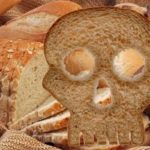
Obviously, an occasional sandwich won’t kill you (unless you are deathly allergic to an ingredient). However, a steady diet of bread, rolls, buns, tortillas, crackers, cereal, cookies, pancakes, pastries, pretzels, waffles, cakes, biscuits, pizza crust, donuts, toaster pastries, muffins, bagels and the like might speed you toward poor health. Most cultures in the world that are healthier than us do not eat much of that kind of stuff. The baker’s dozen list of problems I give below is not nearly complete, but it is a start.

  1. Blood sugar. Refined grains (even whole grain bread is processed grain) create unstable blood sugar and begin to wear out the insulin system. That is a step on the road to diabetes. Read more about that.
  2. Yeast. Intestinal yeasts (fungus) are very damaging to our health. They can result in a wide range of symptoms from rashes and headaches to joint pain and perhaps even cancer. Starches and sugars are their favorite foods. Read more.
  3. Mycotoxins. In addition to crowding out our beneficial bacteria, much of the harm from yeasts comes from the poisons (mycotoxins) that they create. Molds (fungus) grows on grains stored in silos. Commercial grain can stay in silos for as long as 5 years…organic grain only 1 year. These poisons cannot be cooked out. Doug Kaufmann’s TV program Know the Cause is a great source of information about yeasts, fungus and mycotoxins.
  4. Chemicals. I ran across a study about methods for detecting residues of 405 pesticides in grain! That doesn’t count herbicides (like Roundup) and fungicides. None of these need to be listed on the food label.
  5. Gluten. The media and some “experts” paint those of us who avoid gluten as silly fad followers. They do acknowledge that folks with celiac disease need to avoid gluten, but they usually underestimate the number who have it. (At this link, 200 documented reasons to avoid wheat.) I’m one of many who have specific non-celiac sensitivity problems with gluten. This substance is found in wheat, rye and barley. Gluten may bother everyone to some degree because it leads to the creation of zonulin. That can loosen the ties between cells that line the intestinal tract causing leaky gut. Leaky gut can lead to food sensitivity and even autoimmune conditions. Most gluten free substitutes for the “foods” listed in the opening paragraph have many of the same issues. For example, there is concern about arsenic contamination of rice. Sour dough bread has been touted as an answer to gluten sensitivity. This linked article sheds some light on that theory. If it is truly fermented for a long period the old fashioned way it is indeed better. But, to avoid some of the other 9 reasons it should start with whole grain organic flour, not have additives and be eaten in moderation.
  6. Lectins. These are substances created by plants to keep animals (like us) from eating them. They are among other things, hard on our gut bacteria. Gluten is a lectin, but not the only one in wheat. and maybe not even the worst. Steven R. Gundry, MD writes in The Plant Paradox about wheat germ agglutinin WGA that, being smaller, can wiggle through the gut barrier to cause trouble. Surprisingly, whole wheat is a bigger problem than white. Incidentally, bacteria have lessened the lectins in sourdough bread. 
  7. Food additives. There are a slew of chemicals that can be used in making flour. None have been tested to my satisfaction and certainly not in the infinite variety to combinations. DATEM is one I was recently asked about.
  8. Effects of baking. When exposed to high heat, carbohydrates formacrylamide which is toxic to nerves. It is also being studied for a possible role in changes that lead to cancer.
  9. Bad company. The end products using grain often contain, sugar, corn syrup, bad fats, emulsifiers, artificial colors, flavors and preservatives. Most of those are bad for our beneficial bacteria and some contain traces of mercury and other heavy metals.
  10. Addictive. Can you eat one pretzel or just a smidgen of the crusty french bread the waiter brings? Worse yet are the cravings we can get seemingly out of the blue.
  11. Fattening. Can you eat one pretzel? Grains are fed to farm animals to fatten them up. That roll of fat over our belts may have been dubbed “Muffin Top” because that is what it looks like. But, also, eating muffins will help build one.
  12. Phytic acid. This is a constituent in grains. It binds up minerals making them hard to absorb.
  13. Low Nutrition. Most of the starchy items listed at the top have had the nutrition refined out of the ingredients. While we are eating those, we fill up room that could be used for better foods that contain more vitamins, minerals, plant antioxidants, polysaccharide, and polyphenols as well as protein and good fats.

But aren’t the grains a good source of fiber?  The main role of fiber is to feed our intestinal bacteria. Those critters prefer vegetables, seeds, nuts and some fruits. Grains are best when organic, whole and used in something like tabbouleh. Better yet, sprouting or fermenting whole organic grains reduces many of the issues as noted under gluten. Here is information on those methods.


Heartburn pills increase the risk of dying in the next 6 years by 25%

The public is being bamboozled to death by the makers of Nexium, Prevacid, Prilosec, Protonix, Zegerid and the other 24-hour acid blocking heartburn drugs called proton pump inhibitors (PPI’s). Their advertising clearly implies that anyone who gets heartburn should be on the drugs just in case. What is wrong with that? A HECK OF A LOT!

  • This text that is fine print on the back of the box should be in bold on the front of the box:

The box shown holds 42 pills. How many people understand that it is a year’s supply?

  • We need a good amount of stomach acid to digest protein, absorb minerals, make vitamin B12 and protect us from disease-causing bacteria.
  • Therefore, it is just common sense that if you shut down your acid for 24 hours a day for an extended time, there will be a price to pay in your health. Even in the first edition of my book, Natural Alternatives to Nexium 10 years ago, scientific evidence was beginning to showing serious side effects from long term use. I’m talking big problems like dementia, hip fracture and pneumonia. By the time I did the second edition there were a lot more studies. A recent study shockingly comes right out and says they can significantly shorten our lives. STUDY. (This made bigger news in the UK where the media isn’t so dependent on drug advertising.)
  • The drugs don’t even address the root cause of the pain. The problem is seldom the presence of stomach acid, it is that it is going where it doesn’t belong—into the esophagus. Sorting out the various reasons for that was a main point of my book and is covered in the class on heartburn in my Digestive Health Course (that is both online and in DVD’s. Use the code HBN20 to save 20%).
  • Even if you take the PPI’s for just a few weeks, it becomes very hard to get off them. Study subjects that didn’t have heartburn to begin with had it after a month on the drugs!
  • The best doctors don’t recommend proton pump inhibitors. Caring but uneducated docs probably know it isn’t a good idea but just don’t know the alternatives. It doesn’t help that these formerly prescription drugs are just sitting on pharmacy shelves like they are safe.
  • Here are some free tips to help with heartburn without the drugs. Cut back on starchy carbs and sweets. Swallow Dr. Ohhira’s Probiotics daily, and chew one or two at the first sign of trouble. Use Lily of the Desert Aloe Vera stomach formula. There is a lot more information on heartburn in the Digestive section of the Library on this website:

Note: The pills in the background of the graphic came from a lawsuit website. That should tell us something.

Connecting the Dots…High Fructose Corn Syrup to Mercury

Mercury is a poison that accumulate in our bodies and, according to the World Health Organization, can damage nerve tissue, the digestive and immune systems, as well as lungs, kidneys, skin and eyes. A small amount occurs naturally in the environment, but more is added to the air, water and food from industrial smoke stacks. We’ve long worried about additional exposures from certain fish and amalgam dental fillings. But, who knew mercury is also added on purpose to some of our foods? We learned that shocker from my guest on last Saturday’s show, Renee Joy Dufault, PhD, the author of Unsafe at Any Meal: What the FDA Does Not Want You to Know About the Foods You Eat. She was an FDA researcher who was unfairly forbidden to continue documenting these threats in processed foods.

Traces of toxicants such as mercury and other heavy metals become problems for several reasons. 1. They accumulate over time. 2. Their harm is multiplied when other chemicals are also present. 3. They can block nutrients, including those needed for detoxification. 4. Not everyone’s chemistry is good at detoxifying anyway. 5. For obvious reasons, children and pregnant woman are potentially harmed the most. For example, mercury can cause calcium loss. Isn’t it scary that corn syrup or other potential sources of mercury contamination are found in most brands of infant formula?

You won’t see mercury listed on the nutrition facts panel because it slips into our foods through a back door hiding in artificial colors and production chemicals. Mercury is used to kill bacteria that might create enzymes that degrade certain ingredients. (If mercury kills bacteria, it certainly is not helping our intestinal probiotics!) Traces are left behind in ingredients like high fructose corn syrup (HFCS), other corn sweeteners and vegetable oils to name a few. If we assume that HFCS and the other corn sweeteners have been clinically tested to prove they are safe to use…we’d be wrong!

This chart from Dr. Dufault’s book shows the types of corn sweeteners at risk of mercury contamination.

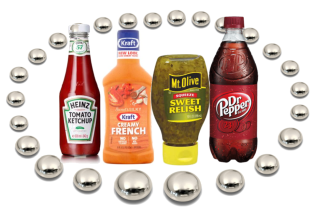
It is easy to see how Americans were eating almost 40 pounds of HFCS per year by 2004. It is used in a huge variety of grocery store products. Consumption had increased 8333% since 1970. Well, I was absolutely sure that I had none of that stuff in my house. Oops. I blushed when I found it in my husband’s pickle relish, most of his salad dressings, grape jelly, ketchup and in a bottle of root beer he’d been given for Father’s Day. There is also some maltodextrin in a couple of his favorite soups. (Dang…found one of my own mistakes—Hershey syrup that I use once in a blue moon over organic strawberries.)

Sigh, there is just no substitute for reading labels (and making hubby do that too).

Perhaps in a future blog I can cover some of the many other toxicants Dr. Dufault’s book covers such as other heavy metals, pesticides, fluoride and chlorine.

The frustrating food fat follies–coconut oil episode

For decades, the diet dictocrats said that eating fat in any form was bad. We should have been suspicious about that advice because those were the same geniuses who told us that formula was better than breast milk and that margarine was better than butter. To their credit, they did finally recognize those ideas were wrong and discovered the danger of trans fats in “foods” like shortening and margarine. (Hmmm…I never heard any apologies).

Even after rightfully shifting focus to sugar and refined starch as the primary concern regarding heart disease, most still stick to their guns that saturated fat is evil and that vegetable oils are to be preferred. I don’t take this faddish science too seriously. One reason is that it doesn’t make a lot of sense in the context of human history or compared to what is eaten by folks in “primitive” cultures that are healthier than we are.

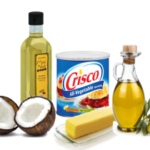
Coconut Oil. The American Heart Association (AHA) recently attacked coconut oil and implied that anyone who thinks it is good is kind of stupid. USA Today covered that story with little questioning of the validity of the position. (Maybe there is no connection, but the pharmaceutical and chemical companies provide major support for the AHA.) GreenMedInfo.com wrote in defense of coconut oil. Toward the bottom of that article is a listing of some of the studies showing health benefits from coconut oil. I don’t recommend getting carried away with coconut oil. Not everyone will have a good response and there are other perhaps better choices below. Yes, coconut oil is mostly saturated fat, but… Here is more information on coconut oil and MCT’s (medium chain triglycerides).

Saturated fat. There is a virtual war going on in cardiology about even the most basic assumptions—that cholesterol is the cause of heart disease and that saturated fats cause cholesterol. The old guard at AHA is still recommending vegetable oils. (See below) They must have needed a change of underwear when they read the April 25th British Journal of Sports Medicine. An editorial written by 3 cardiologists declared: Saturated fat does not clog the arteries.

Vegetable Oils. Vegetables are great. Vegetable oils, not so much. Oils like those from corn, soybeans, cottonseed and safflower are high in the pro-inflammatory omega-6 fats. (Heart disease is at its core an inflammatory condition.) Worse yet, in her June 24, 2017 interview, Dr. Renee Dufault will tell us that they are a source of mercury. Canola oil is a special case. I have other complaints about it which I discuss in my book noted below.

Macadamia Nut Oil. Nut oils are generally good. Macadamia is far and away my favorite. Not only does it have a beneficial fatty acid profile like olive oil, it also has a higher smoke point and is absolutely buttery-delicious. I use it for sautéing veggies, salad dressings and in my occasional fancy birthday cakes. It is not sold everywhere. This links to my source for MacNut Oil. The MNO brand is unrefined golden Australian oil and is vastly superior to the pale Hawaiian.

Olive and Avocado Oils. Olive oil has a well-deserved reputation for being healthful. Two cautions though: (1) The healthful version is legitimate “extra virgin”, but there are a lot of fraudulent products on the market. (2) Olive oil has a low smoke point and is not stable in the cupboard for long. Avocado does not share the olive oil problems. I just haven’t yet been able to research the processing methods.

In my easy to read skinny book, Fat Free Folly, I cover a lot of detail on the above topics. Now that HBN no longer has an online store, my son Andy Hopkins’ HealthWorksMart.com is the only place that book is available. (My other books are on Amazon.) I asked Andy to lower the price on the fat book from $6.95 to $5 to help me spread some sanity. I figured while I was at it I should also twist his arm to give another discount. So, until the end of June, use the code MW10 to save 10% off your whole purchase of his already discounted products (including for example, my books, Dr. Ohhira’s probiotics and MacNut Oil).

Is worldwide obesity our fault?

The U.S. is rightfully worried about foreign hackers disrupting our life styles by messing with elections and potentially airlines, the power grid, and so on. However, perhaps the rest of the world should be even more worried about how we’ve hacked into their lives. As a leader and role model for the world, it seems to me we’ve inadvertently undermined their lives and health in so many ways. The national news this week declared: “over 10% of the population of the world is obese.” Why? Because we:

  • sell them soft drinks. That alone would do it!
  • sell them yummy, addictive refined packaged foods.
  • open fast food restaurants in every corner of the globe.
  • distribute guidelines for what to eat that sound authoritative but over the years have turned out to be wrong.
  • convince them their natural healing methods are not good enough and sell them drugs that, among other things, kill the good bacteria that would help keep them slim.
  • turn tens of thousands of chemicals loose in the environment which can then poison metabolism.
  • export labor-saving devices so that people are not as physically active.

So, although our country is having a health crisis, it looks like we are inadvertently keeping the playing field level by taking everyone else down with us!

Thank goodness for people like you who know better than to fall into these traps. If we can build on that, there is hope for starting a worldwide fitness trend.


Glutathione is a superhero nutrient that packs a powerful punch

During last week’s radio show, Dr. Johnson said that he uses glutathione (GSH) in fighting the effects of mold on the body. Then Howard Garrett and I talked about how many health problems are caused by pesticides. That made me think of glutathione again because it helps with pesticide problems too. GSH is the master antioxidant and detoxifier, helping even rid us of a variety of threats to our cells.

GSH (a tripeptide) is also involved in maintaining the immune system. Interestingly, low glutathione levels are linked with diseases such as cardiovascular, cancer, AIDS, Alzheimer’s and Parkinson’s. Besides its own role in protecting cells from free radical damage, GSH also makes other antioxidants (like CoQ10 and vitamins C and E) stay active longer. It is no wonder that glutathione is considered important for cardiovascular health as well.

Our bodies make some glutathione. However, it is quite inconvenient that, as we get older and have accumulated more free radicals and toxic substances, our levels of GSH get dramatically lower instead of higher. Doctors who practice integrative or anti-aging type medicine often administer glutathione intravenously. That is extremely beneficial, but it must be done routinely and the expense can mount up.

I decided to give this amazing nutrient a plug because it is not well known. For one thing, nutrition isn’t really taught in school. Folks who understand the importance of nutrition may listen to radio shows like ours or read up on nutrients and hear about it. However, the average person only knows what the manufacturers invest marketing money in. Supplement makers certainly know how powerful glutathione is. But, unfortunately, oral glutathione supplements do not work well to raise blood levels. Even some high-tech, expensive GSH supplements only help a little. So…bottom line…there has not been an incentive for suppliers to spend money educating consumers about glutathione.

Having long been aware of all this, I was very excited to learn about a different approach to raising glutathione blood levels. There is a special microorganism that will happily live in our intestinal tracts and make it for us! That probiotic strain is Lactobacillus fermentum ME-3. For obvious reasons, I just call it ME-3. Essential Formulas is the company of friends that found Dr. Ohhira’s Probiotic and brought it to the US. They also discovered ME-3. Wisely, they formulated it with other appropriate nutrients into three products depending on what a person wants to focus on. There is one for Detox and Liver Health, one for Immune and Vitality and another that targets Cardio Wellness. Learn more.

Please keep in mind that I invite companies like Essential Formulas to be sponsors of our radio show only when I believe in what they are doing and I want to help spread the word. Personally, I take ½ dose of the Immune / Vitality and ½ of the Detox / Liver. Both contain ME-3, but I use two products to get the other nutrients they contain.

Flim-flam and flip flops on saturated fat, statins, diet sodas and fish oil

The average citizen does not spend their days studying health research. They rely on experts to provide guidelines about diet and treatments. Sadly, the “experts” can have good intentions, but offer bad advice. Just in 2017 my blogs discussed misleading pronouncements about doctor’s orders in general, sleep / gluten / vaccines, salt / low fat / chocolate, coffee / blood pressure, and macular degeneration. Here is a fresh batch for your amusement:

  • Saturated fat. The research on saturated fats is shaky and some populations like the Maasai in Africa thrive on a diet very high in saturated fats. And yet, saturated fats have been roundly demonized for years. As more careful research has been done, the tide is turning. Maybe saturated fat is not a cause of heart disease. STUDY. And then there is all that blathering about how we should seek out low fat dairy products. Here is a review of a growing number of studies that counters that advice. STUDY.
  • Statin drugs for cholesterol. These drugs may have a role for those who have had a heart attack or who have frank cardiovascular disease. But, the controversy on statins for most people and the potential side effects could fill several blogs. For now, I’ll settle for these three tidbits. These drugs do not seem to save lives when used as primary prevention for seniors who have mild elevations in cholesterol and blood pressure. Also, although the trend did not rise to the level of statistical significance, deaths from all causes increased among statin users over age 75. STUDY. In another study, people taking statins for 4 months or more were more likely (27%) to be diagnosed with a back problem. According to one study you are also more likely to need cataract surgery if taking a statin.
  • Diet sodas. In a past blog, I discussed that one diet sweetener, may cause (among other troubles) thyroid problems and weight gain. According to a study in the American Heart Association medical journal Stroke, a diet drink per day increases the risk for stroke and dementia.
  • Blood-thinning drugs. Folks who have been put on anti-coagulant drugs like warfarin (Coumadin) are often told to stop eating broccoli and other vegetables. It makes more sense to me that integrative physicians say you should consume a routine amount of healthy greens and adjust your drug around that. Patients on these “blood thinners” are also warned to avoid fish oil because it helps keep platelets from clumping. One of my favorite sources, People’s Pharmacy discussed new thinking in that area. Article.

So, if you can’t trust the so-called experts, who can you believe? Well, let’s start with your own good judgement. Just consider whether the advice makes sense compared to what our healthy ancestors did or to how populations without industrial food and high technology stay healthy. Also, if hundreds of studies show one thing, e.g. that garlic is good for you, don’t get too excited about a single paper that bucks the trend. Carefully review the side effects of a drug and remember that it was proven “safe” and “effective” by the manufacturer. They can pick which studies to reveal and which to hide. Flim-flam obviously comes from suppliers of products like diet soft drinks and so their pronouncements should be suspect. Also, keep in mind that hospitals and clinics (by and large) are paid for quantity of services provided rather than quality of outcomes. Their advice may reflect a habit of over-testing and over-treating.

Of course you can listen to the authorities that we have on the Healthy by Nature show. They usually have good conventional training, but have also worked to learn about natural and traditional methods. They also maintain a healthy skepticism about popular protocols.

New research shows a way to preserve your precious eyesight

The exciting information that Bill Sardi brought us on the program Saturday was so powerful and life changing for some folks that I thought I’ better repeat at least some highlights. Most of us probably know someone who is struggling with macular degeneration or has a parent that suffers with it. Do them a giant favor and forward this article to them. They can listen to the show by clicking here.

Macular Degeneration (MD) causes more people to lose their eyesight than cataracts and glaucoma combined—more than 10 million Americans are affected. (The photo above illustrates the effect and it can be worse.) Furthermore, even people with perfect vision should pay attention if one of their parents had the problem. That’s because 45% are also likely to develop the disease in their lifetimes. Sadly, until now, there has been no proven way to prevent MD. Nor is there a proven treatment for the most common type (dry). The therapy for the fast-progressing wet type is expensive and involves monthly injections into the eyeball. (Yikes. Some science suggests that the drugs used in those injections might cause blindness.)

There hasn’t even been an early warning of MD…just the prospect of surprising and terrifying news during an eye exam. Now an FDA-approved test can predict MD. This test measures how long it takes our eyes to adapt to a dark environment after having been exposed to bright light. If a person’s eyes take 6.5 or more minutes to make that transition, they can expect to develop macular degeneration within 4 years—unless they know the right things to do.

“Popular” is not the same thing as “effective”. For example, you may be familiar with the Age Related Eye Disease (AREDs) antioxidant supplement formulated by the National Eye Institute and marketed most widely by Bausch + Lomb under the name PreserVision®. That combination has been shown to slow the worsening of MD (25% slowing over 10 years), but it does not stop the loss of vision or restore what has been lost. Worse yet, for 2 of 4 genetic types, it even makes matters worse.

One supplement has recently been shown to do what we really need. Longevinex®, formulated by Bill Sardi, is not new. People have been taking it for various reasons, e.g. to protect their hearts or slow the effects of aging. Surprisingly, many consumers reported that they also experienced a major improvement in their eyesight…even the reversing macular degeneration. And, that observation was not just made by consumers. An eye doctor at a VA hospital said he saw reversals of MD among many patients using Longevinex. As impressive as these testimonials are, they are not science per se.

Then Dr. Stuart Richer OD, PhD*, in a small study of elderly subjects with dry macular degeneration, discovered that roughly 86% of subjects significantly reduced the time it took for their eyes to adapt to the dark when taking Longevinex. That means it had reversed the process that is predictive of macular degeneration.

Sure, it would be great to have a larger and longer study proving the benefits of Longevinex for Macular Degeneration. Unfortunately, too many of us cannot wait that long. Such studies take years and many millions of dollars. But, it is even worse in the case of a natural nutritional supplement because current law forbids a nutrient to say it prevents or treats a disease—no matter what the research shows! Bill Sardi tried to conduct a study on Longevinex for macular degeneration but the FDA said he would have to declare it a drug. Also, he has found that eye doctors do not refer patients for such tests. (Is there just too much money to be made giving those eye injections?)

If you have a family history of MD or have been diagnosed with it, what do you have to lose by trying Longevinex? At the least you would be supporting the health of your heart and gaining other benefits you can read about in my article on resveratrol. (Note. Plain resveratrol is only 1/6 as effective Longevinex which combines a safe dose of herbal antioxidants (resveratrol and quercetin) with vitamin D, a metal binder (IP6 phytate from rice bran) and DNA-repairing nucleotides (RNA).)

Preliminary studies suggest that Vitamin B3 (as nicotinamide or niacinamide) and zinc also help protect the eyes against MD. Those are contained in another Bill Sardi formulated product I greatly admire and personally use, Molecular Multi. A clean diet and UV-blue filtering sunglasses may also help.

* Dr. Stuart Richer OD, PhD is Director of the Ocular Preventive Medicine at the Captain James A Lovell Federal Health Care Facility, North Chicago, IL, and President of the Ocular Nutrition Society. He announced that discovery at the annual meeting of the Association for Research in Vision & Ophthalmology (ARVO), Baltimore, MD, May 8, 2017


Healthy By Nature Show