Archive for the ‘general’ Category

Could MORE cups of coffee reduce blood pressure?
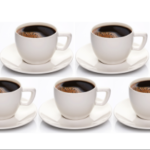
In last week’s blog I discussed: The great debates about Fat, Salt, Chocolate, what is too much OR TOO LITTLE? It appears that coffee may also have different and surprising effects at various levels of consumption. Below I cherry pick from an article by Jacob Schor ND, FABNO in Natural Medicine Journal.

Dr. Schor reviewed a study conducted with 63,257 Chinese participants, aged 45 to 74 years over a period of 9.5 years. The researchers controlled for “height, weight, lifetime tobacco use, current physical activity, sleep duration, and medical history” so that they could focus on intake of coffee (and tea). Oddly, they noticed that high blood pressure was more common among participants who were female, those who had never smoked, those who were more physically active and those who did not drink alcohol. It was less surprising that hypertension was more common among those who were older, had less education and ranked higher on the body mass index.

Since coffee tends to rev us up, it would not come as a surprise to most people that it could increase blood pressure. Doctors know coffee affects several factors such as the sympathetic nervous system, the adrenals, kidneys, the energy system and it signals blood vessels to constrict. In the study, drinking less than one cup of coffee a day was not associated with hypertension. Drinking one to three cups of coffee per day (at 237 mL, nearly 8 ounce cups) was linked to increased blood pressure.

But, here is where it gets pretty interesting. Drinking more than three cups a day seemed to lower blood pressure. How is that possible? Well, it appears that there are other constituents of coffee that have effects that counters those of caffeine. For example, coffee contains potassium which relaxes blood vessels and promotes the creation of nitric oxide. Five cups of coffee can deliver about ¼ the daily need for potassium. Coffee also contains Chlorogenic acid (a polyphenol) which tends to lower blood pressure. At higher intake amounts, the other components of coffee seem to tilt the balance to the benefit side.

Higher coffee intake also seems to lower the risk of liver disease. I found that information in another analysis of data from that same study.

What is the takeaway from all this? Should we work to drink 4 or more cups of coffee a day? (If so, hopefully, organically grown and not as sugary coffee drinks.) Personally, I don’t think that is the best answer. There are other, more nutritious, sources of potassium. Think acorn squash, avocado, beans, sweet potato, spinach, potato, Swiss chard, raisins, prunes, tomato, and as I’m sure you already know, banana. Those foods as well as spices, fruits, vegetables, red wine, olive oil and cocoa provide the benefits of polyphenols and antioxidants that are in coffee.

If your blood pressure stays in what your doctor says is the normal range, maybe that means whatever amount of coffee you are drinking is okay.  


The great debates about Fat, Salt, Chocolate, what is too much OR TOO LITTLE?

If a little is good, more is better, right? That does seem to be the American way. We can have too little of good things and miss the benefits. Unfortunately, we can also get too much of even a very good thing. Well-meaning but misguided government agencies often lead us to one extreme or the other. To find the right balance can mean investigating beyond the headlines. Here are 3 cases in point:

  • For decades, the public was warned that fat in foods was the enemy. That silly advice resulted in a slew of unhealthful carb-loaded fat-free foods and an explosion of obesity and diabetes. My easy-read little book on the subject (Fat Free Folly) explains how that occurred and gives science-based advice about choosing good fats vs. the bad ones. Implementing a smart-fat / low crap-carb* diet is now a lot easier. Our friend Fred Pescatore, MD just published an exciting book detailing the advice that he gives to his red-carpet worthy celebrity patients. The A-List Diet: Lose up to 15 Pounds and Look and Feel Younger in Just 2 Weeks contains 100 delicious recipes, and easy-to-follow meal plans.
  • Chocolate. When I was in natural foods retailing years ago, I remember that chocolate was supposedly bad for us. (Maybe it was the puritanical principle that if it tastes / feels good it must be evil.) Therefore, many manufacturers began to substitute carob (from the pea family) for chocolate. While carob is healthful, it is certainly no competition for chocolate in the flavor department. Now we know that chocolate contains powerful antioxidants and is, for example, associated with potentially reducing inflammation and blood pressure as well as lowering the risk of various cardiovascular events. We also all understand that dark chocolate is better than milk chocolate although some studies do not differentiate. Less well known is that science has shown that benefits peak at a certain intake and then begin to decrease. STUDY of men. STUDY of women. With really high consumption chocolate can even become a liability! The sweet spot (yes, I noticed the pun) may be something like 3-5 servings a week of an average portion size**. I use muscle testing as a double check and find that after having chocolate a couple of days in a row, my body wants a day off.
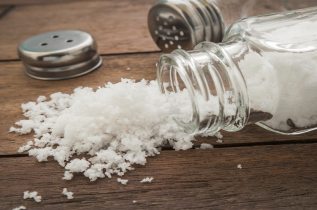
  • Salt / sodium. Let’s start with the fact that animals will travel distances to find a “salt lick”. Like the other minerals in those deposits, salt is an essential nutrient. Sodium helps balance fluid inside and outside cells as well as being important to the function of nerve tissue and muscles. There was an article this week in the Dallas paper on the trial of a man who murdered 4 women. The defense explained that this guy had brain injury from sports-related concussions, post-traumatic stress disorder and was on a cocktail of psychiatric medications. This was already a setup for a perfect storm, but the insanity plea also noted that the final trigger for the rampage was low sodium levels. The lack of salt contributed to swelling in the brain and confusion. (I have heard of the “Twinkie defense” but the “Low sodium defense” is a new one to me.)

Dogma has it that folks with high blood pressure should reduce sodium intake. However, a recent large scale study calls that idea into question. ARTICLE. This quote is from that article, but I added the emphasis: “the researchers found that the study participants who consumed less than 2,500 milligrams of sodium a day had higher blood pressure than participants who consumed higher amounts of sodium.” I have grave misgivings about the government’s push to force lower sodium intake. (Should we take their advice with a grain of salt?) But, I also worry about people who get a huge amount of sodium from eating processed foods. Besides the uncertainty about the health effects of gigantic amounts of salt, those foods pose other problems and are typically low in potassium which balances sodium.

Moderation in general may be the key rather than trying to force any component of the diet to artificially high or low levels. Also, each person is Individual and generalized rules may not apply.

* (“crap-carb” is my highly scientific term for the refined carbohydrates (e.g. sugar and starch) that have become a blight on the American food supply.)

** I only had access to the whole study on women. That one said the average portion of chocolate for women age 62 and over was 19 grams which is like the standard US portion size, 20 grams (3/4 ounce). Younger women in the study averaged 30 gram portions. For a moment, I thought maybe the younger females ate more because of monthly cravings, but the youngest in the study was 48. Note: this study did not separate milk chocolate from

Regeneration with Human Umbilical Cord Stem Cell Therapy

If you did not hear the show August 5, 2017, I highly recommend that you listen to it. You will hear astonishing recovery stories from a debilitating back problem, bone on bone knees, Parkinson’s, kidney failure and even stage 4 metastatic breast cancer. Since stem cells target any area with damage and inflammation, regeneration of shoulder problems, elbow problems and meniscus tears have become routine. There are answers to more questions in my May 2, 2019 post.

Stem cell therapy uses the same power that created the body to restore it and foster regeneration. Stem cells are a mind-blowing miracle of life. These generic cells seek out areas of the body that are inflamed or damaged and then become whatever type of specialized cell is needed at that location. They also stimulate other cells to do the right thing. The stem cells discussed here are from human umbilical cords with which there are no ethical concerns. (We are actually making a health-enhancing use of what would otherwise be medical waste.) I will talk about less desirable stem cell sources below.

When we are born, we are endowed with an enormous number of stem cells. That is because they are needed to flood the baby’s body, building tissues and organs of all types. Unfortunately, as we age, we have fewer of these cells and therefore have a harder time rebounding from stresses and injury. By the time we are teenagers, we have only 10% as many stem cells as we did originally. By the time we are age 50, we only have ¼ as many as a teen. And on it goes.

Our own stem cells can be extracted with types of surgery (into blood marrow or liposuction). In addition to the well known surgical risks, the cells from those sources are relatively scarce. I also wonder if our aged stem cells haven’t accumulated damage like our other cells  and might be less vigorous. That is why the preferred approach is where doctors inject brand new stem cells.

Is this some wacky new idea? Far from it. If you search “stem cells” on pubmed.gov, the website returns over 330,000 scientific articles. (The research started in the early 1900’s.) To narrow it down, search for “stem cells kidney” and you will still see about 7,000 articles. This shows how excited scientists are about stem cells, however, I think that the most exciting for me are the success stories like the ones discussed on my radio interviews…especially the one listed at the top.

It is a real breakthrough that a system (very much like a blood bank) has been developed to collect, safety-screen, protect and distribute umbilical cord blood. It is a byproduct of that system a source has been created for the umbilical cords themselves. That is the richest source of stem cells in terms of numbers, but they are also the most vibrant and therefore offer maximum regeneration power. There is no concern about rejection, allergy or introduction of DNA from others. From what I’ve found, Infinity cells have the highest level of quality control.

As one of my listeners/readers, you can receive a no-pressure, no charge consultation to find out if your health problem might be helped with regenerative medicine using Human Umbilical Cord Stem Cell Therapy. That consultation and often free x-rays as well have a value of $250, but there is no charge—if you tell them Martie (or Healthy by Nature) sent you. Call Dr. Darcy Brunk’s office at 972.303.0683. They can also tell you if there is a doctor in your area (Doctors interested in offering this method can also call the same number.)

Nature is a fabulous healer, but sometimes we ought to give her a hand.

Half-truths in the news about sleep, gluten & vaccines

sleep

Longtime radio celebrity, Paul Harvey, used to give part of a story and then take a break. When he came back he’d give “…the rest of the story”.  These days this happens in the news, but with an unfortunate twist…often they do not give the rest of the story. Omitting important facts can be as misleading as lying. Three cases in point:

  • We often hear that the sweet spot with sleep is 7-9 hours. The negative effects of sleep deprivation are well documented. However, when the “experts” say that over 9 hours of sleep is associated with this or that problem, they should say why. It isn’t likely that sleep itself is the problem. The trouble is in why a person sleeps that long. Do they have a problem like sleep apnea, an under-functioning thyroid, anemia or depression? Digging ever deeper, that health problem is likely to also be a symptom. The root cause of health issues is typically a lack of something the body needs (e.g. poor nutrition) or an overload of something it can’t handle (e.g. toxins of one kind or another).
  • The media loves to point out that only 1% of the population suffers from celiac disease and therefore needs to avoid gluten in foods. (Gluten is found in wheat, barley and rye.) The more generous sources mention that up to 6% of Americans may have gluten sensitivity. They imply that anyone else who limits gluten is a gullible fad-follower. My first issue with these proclamations is that both celiac and gluten sensitivity are greatly under-diagnosed. There are many ways we can have a negative reaction. Secondly, gluten generates a substance called zonulin that is known to contribute to leaky gut which might affect a much higher percentage. Then there is the fact that most Americans just plain eat too much starchy carbohydrate. I mean, there is some reason that so many people feel much better after giving up those grains. They may enjoy the end of rashes, GI trouble, headaches and other symptoms. The least these wizards should do is to counsel eating of whole grains which benefit our gut bacteria. Fermenting grains seems to make grains more tolerable.
  • Maybe the biggest “rest of the story” omissions are regarding the vaccination debate. Medical and media leaders are so righteously dug into their dogma that it can be credibility suicide to even hint that the jury is still out. Let the mocking begin if a person dares suggest that there may be worrisome toxins (e.g. mercury) in the immunizations …or that certain classifications of kids (e.g. African American boys…or those who are mineral deficient) might be more vulnerable…or that we now may be giving too many shots, too early. The discussion is shut down long before anyone can mention that homeopathic immunization may work even better and without the side effects.

It seems unnecessary to say this, but here goes anyway…don’t believe that you are always getting the whole story in the news. Keep an open mind and dig a little?

Popularity versus quality in a multivitamin

Multivitamin

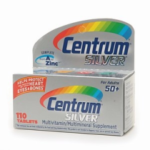
Centrum Silver is the top-selling multivitamin brand in the US. That is not very surprising because the company has a gigantic advertising budget and has succeeded in securing shelf space in every major retailer making it very easy to get. While I understand why even very smart people have been persuaded to take Centrum, I don’t recommend it. Below are some of the reasons that also applies to most of the mass market vitamins:

  1. Small amounts of nutrients. Centrum compares its contents (and not very favorably) to the government recommended daily intake levels (DV). Those federal guidelines may protect the average person from third-world type deficiency diseases, but they do not promote optimum function or meet the unique needs of an individual. For example, I consider 60 mg of vitamin C to be a joke. Most studies show that 500 mg is a more rational minimum and some folks need multiples of that amount. The DV suggestions for minerals are a little closer to realistic. But, the 70mg guideline for selenium is way short of 100-200mg that is a more beneficial dose. (Selenium is important for thyroid function, cancer protection and a lot more.) Centrum contains a mere 19 mg of selenium. Centrum also contains more blue dye than it does crucial vitamin B12.
  2. Cheap forms of nutrients. Speaking of selenium, Centrum uses the inorganic form sodium selenate which is more toxic, less soluble and less beneficial than other forms such as an amino acid chelate or Methylselenocysteine. The calcium and magnesium are basically just ground rocks. The B-vitamins are not in the active forms. The vitamin E is synthetic rather than the more active natural form.
  3. Label trickery. The multivitamin brags that it contains Lutein for eye health. At first, the 250 mcg provided might sound like a lot. However, that is micrograms and is only a little over 1% of the effective dose shown in the studies—18,000 mcg (18 milligrams)! The same principle applies to their talk of Lycopene for heart health. Centrum contains 300 mcg of Lycopene, but to claim a heart benefit, it should have 8,000 (8 mg)!
  4. Toxins? Some ingredients worry me. For one thing, it uses nickel as a supplement. On the nutrition tests used in clinics, I always found nickel listed with the toxic elements. Deficiencies are so rare and the side effects of an excess so alarming that most nutritionists believe nickel should only be consumed in food. These 3 ingredients are sources of aluminum: Blue 2 Lake, Red 40 Lake, and Yellow 6 Lake.
  5. Unnecessary non-nutritive junk. Natural vitamins that I prefer do NOT contain the following stuff listed in the ingredients of Centrum Silver: Microcrystalline Cellulose, Modified Corn Starch, Corn Starch, Maltodextrin, BHT (preservative), Crospovidone (polyvinyl N-pyrrolidone), Gelatin, Hydrogenated Palm Oil, Hypromellose (hydroxypropyl methylcellulose (a semi-synthetic polymer), Polydextrose (a synthetic polymer of glucose), Pregelatinized Corn Starch, Silicon Dioxide (the major component of sand), Sodium Ascorbate (preservative), Sodium Metavanadate (can cause GI discomfort), Talc, and Titanium Dioxide (a pigment powder used in paint)
  6. Centrum is owned by a drug company. Pharmaceutical giant Pfizer’s doesn’t have a great incentive to produce a wonderful multivitamin. Their bottom line profit will be even bigger if people get sick because they did not get the nutrition they needed.
  7. Centrum’s website doesn’t make it easy to see what is in the product. I finally gave up and went to the website of a responsible retailer who lists the contents and ingredients of products it sells.
  8. Taking Centrum gives people a false sense of security. Having been duped into thinking that they are doing themselves a favor by buying it, consumers miss out on the opportunity to benefit from a high quality therapeutic product. Worse yet, a few probably think that Centrum is a substitute for eating healthful food! (Hah! Even a great multi isn’t that good.)

Supplements like multivitamins versus drugs

supplements

Before I discuss some specific topics about multiple vitamin/mineral supplements, I probably should at least touch on the question of whether they are useful. A bunch of studies show benefits from multivitamins. However, it seems that only the ones showing no result or a problem make the news. I always read at least the abstracts of those negative reports and it seems most of them have design problems. They often start out showing their inherent bias in the introduction by using other questionable studies as background. Below is one example of a study with remarkable benefit that should have been in the newspaper:

  • 7,728 postmenopausal womenwho had been diagnosed with invasive breast cancer were followed for about 7 years. Breast cancer deaths were 30% lower among the women who were taking multivitamins. 30%! Link to study.

The subjects in that breast cancer study were not instructed which product to take. Because quality makes such a big difference, I’d love to know how the data would stack up if we could compare the women on a great multivitamin to those on some crappy product from a discount store. For example, I saw one study that showed significant memory benefits in subjects taking a so-so multivitamin. In contrast, a similar study did not show benefit…but, the multi used in that study was Centrum Silver. Speaking of that particular product, I started to list at 8 or more reasons I do not approve of it. But, to keep this blog from getting too long, decided to give that list next week. (Don’t miss it. It will be brutal.)

I’ve had multiple requests about Bill Sardi’s Molecular Multi. People want to know where to get it, which supplements I was able to stop taking, and what things I still take along with it. (By the way, Molecular Multi commercials air on our show at no charge because I hope to boost sales enough that Bill Sardi can become a sponsor.) The list below is after I switched from what was already a very good 4-capsule multivitamin:

  • Using muscle testing as a double check, I eliminated: ascorbyl palmitate (an oil soluble form of vitamin C), vitamin E, a fancy B-complex and potassium.
  • I also reduced the amount of vitamin A, zinc, selenium and vitamin D.
  • It was reassuring that after Dr. Einsohn muscle tested me on Molecular Multi, he said that he had never seen such a positive reaction. He wanted to buy some.

Link here to Bill Sardi’s article about multivitamins. Mr. Sardi will soon release a bone formula that has vitamin K2. Meanwhile my vitamin D spray has K2 in it. Other supplements that I still take: Longevinex, an adrenal stress formula, Dr. Ohhira’s Probiotics, Reg’Activ Liver/Detox and digestive enzymes. I also love Willard Water and Kyolic. Because of my small thyroid, I take 4 drops of a liquid iodine. Oh, and I take magnesium at bedtime and put fish oil in my protein drinks.

That may sound like a lot of supplements (the photo is generic, not my assortment). But consider this: 36% of seniors take 5 or more prescription drugs. I take no pharmaceutical chemicals whatever. I don’t have a particularly good family health history and what I’m about to say is not bragging, but rather a testimonial for nutritional supplements (and a prayer of gratitude). I have normal blood pressure, cholesterol and blood sugar. I very sleep well; can walk 5 miles; do core-strengthening planks; and can touch my toes. I can usually work a 6-star sudoku puzzle so, there must be at least a few working brain cells. I am the same height that I’ve always been. (Okay, wise guys…as tall as I’ve been as an adult.)  I attribute the fact that I’m old yet still healthy and cheerful to nutritional supplements…and to what are mostly decent diet and lifestyle habits. (I don’t smoke or drink soft drinks.) I am fussy about the pills that I take and think that Molecular Multi is an especially good investment. Even so, I still want to save. That is why I buy 3 at a time to get one free. (It is currently only available directly from Bill Sardi’s company, Lifespan nutrition.)

Martie becomes a stalker after seeing an egg white breakfast

cholesterol

Last Friday morning, while eating breakfast at La Madeleine, I happened to notice the plate of another diner. I just could not stop thinking about how pale her eggs were. You see, I’m just not a fan of egg white scrambles and omelets because egg yolks contain some wonderful nutrients. (I like to point out that an egg has every nutrient needed to build a chicken. Except for some protein, those are all in the yolk.) I was thinking that a lot of folks haven’t yet heard that eggs are off the no-no list. Some are still suspicious because there is a little cholesterol in the yolks. But, we need to remember that our liver makes as much as 80% of the cholesterol in our blood. If we eat more, the liver just makes less. Geesh, I really couldn’t just walk up to the lady’s table and start lecturing her about eggs. But, I also couldn’t let it go. So, I craftily decided to apologize for interrupting her meal with her husband to give her a radio card. I said that, seeing the egg whites, I guessed she was interested in heart health. She therefore might want to listen to Jim LaValle who would be talking about that the next day on our show.

Shirley (I now knew her name) said she was indeed being careful because her cardiologist said she had a blockage in an artery. I mentioned that sugar and starch are now thought to be the bigger threat for heart disease than dietary fat or cholesterol in foods. Most of the time I talk to listeners who already know at least the basics. So, I was a little surprised when she said that she had just read about that the day before. Oh, my. Dr. Atkins had been saying that since the 1970’s. It does take a while! (And, if what you know comes mostly from drug-dependent mainstream medicine, even longer.)

My new friend said it is just hard to change. Yes, it is. But, I’m sure you’ve heard that if we keep doing what we’ve been doing, we will keep getting what we’ve been getting. Shirley had been getting bypass surgery and prescriptions for multiple statin drugs to lower her cholesterol. Unfortunately, she could not tolerate the side effects of the drugs. I had already recorded the LaValle show and so Kyolic Reserve and #107 were fresh on my mind.  I told her about how they help reverse the most dangerous type of arterial plaque. Shirley was leaving when I remembered the remarkable results a listener, Dave, had with vitamin K2. It helped him reverse surgery-ready hardening of the carotid artery. Darn, she was already out the door. And even in the unlikely event she did listen to Dr. Lavalle’s interview, she would not hear about K2. I could not help myself, I chased her out into the parking lot to tell her about Dave’s experience. By now, I she must think I’m a crazy person. (I think I could hear my husband Bill roll his eyes.)

Shirley said that one of her arteries is 60% blocked. (I know of people reversing their arterial diseases from blockages of a much higher percentage.) She does not want another surgery and can’t tolerate the statins. Perhaps she could try a new type of drug, Repatha. But, she may not like the $15,000 a year price tag or the side effects that range from the flu and back pain to high blood pressure and dizziness to name a few. (Oh, by the way, the drug has not been shown to improve death rates from cardiovascular disease.) Why not try a lower carbohydrate diet, some Kyolic Aged Garlic Extract and Jarrow’s K-Right? There are hundreds of studies on aged garlic extract alone and they show fringe benefits, not side effects!

What if the doctor’s orders are wrong?

doctor’s orders

The whole idea of doctor’s “orders” bothers me. After all, it is your health and your choice! A doctor should be an advisor like your lawyer or accountant. Decisions should be made by the patient after the doctor and patient share information. It has been considered routine and acceptable to get a second opinion before taking a major step such as surgery. But, it is apparently no longer smart to simply take her word for what to do about chronic conditions and test results…at least without double checking those recommendations.

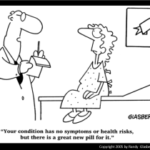
The problem is that the average doctor just goes by the “standard of care” guidelines. They are kind of a cookbook created by what is basically a committee. The rules don’t allow much innovative thinking and become stagnant dogma that is perpetuated…even when there is little scientific evidence to support them and even when they are wrong.  Too often the rules are also influenced by entrenched economic interests such as those of pharmaceutical companies, big medicine and even insurance companies. Below is some evidence that what is considered “standard” may be far from optimum. (In case you can’t read the caption in the cartoon, it says “Your condition has no symptoms or health risks, but there is a great new pill for it.”)

  • This article from Consumer Reports (CR) debunks the myth that the higher our HDL (“good” cholesterol) the better. CR notes that “increasing HDL levels arti­fi­cially, without behavioral changes, doesn’t reduce risk at all.” Drugs are being prescribed to raise HDL, but the studies show that they do not lower cardiovascular risk. And, more surprisingly, elevated HDL levels might even be a problem.
  • This article in the Atlantic tells of a man who wisely pushed back on doctor’s orders to have a stent installed in one his arteries in favor of doing more research. The article notes a contributor’s summary that “nobody [who is] not having a heart attack needs a stent.” Also, “hundreds of thousands of stable patients receive stents annually, and one in 50 will suffer a serious complication or die as a result of the implantation procedure.”
  • This article in UK’s Daily Mail points to a lack of science behind a number of hard and fast “rules” we’ve been taught. Examples include: get 30 minutes of exercise 5 times a week; take 10,000 steps a day; eat 5 portions of fruits and vegetables a day; eat oily fish once a week; drink 8 glasses of water a day; and aim for a certain calorie level (2,000 for women / 2,500 for men). Even if there was science to prove these rules, they would be for an arbitrary average person. You are unique.
  • This is just some relatively new information, but this list could be very long indeed.

What about patient advocacy groups as a source of information? We’d like to think they are pure of intent, but according to The NY Times, 9 out of 10 have potential conflicts of interest because they take money from big pharma and often have their reps on the charity’s board of directors.

Well then, where should we get a second opinion if most doctors in the insurance network went to similar medical schools and operate out of the same cookbook? (That just gives us the same opinion twice.)  Dr. Google is a good place to get questions, but not always reliable answers. (The information in the HBN library gives some reliable sources.)

Ideally, an integrative or functional medicine doctor can give you both the standard answers and the alternative and innovative approaches. He or she can help you decide which avenue makes the most sense for you. (The type of physicians who sponsor our radio show are like that.) If you don’t have access to one of those, you can put together a little team. For example, your brain trust might include a highly-recommended chiropractor, a nutritionist, an acupuncturist and a massage therapist. You might be surprised that a chiropractor can help with a major cause of acid reflux (hiatal hernia) and a nutrition adjustment might solve depression, and so on.

10 advantages of bare feet and leaving our shoes at the door

Advantages of bare feet

As far back as I can remember, I always liked going barefoot. As a kid, I would do that all summer in spite of the bee stings I often got due to the clover in our yard. Science now tells us that there are advantages of bare feet.

I could write this whole article about the problems that shoes can create—corns, bunions, plantar fasciitis, sprains and falls, hammer toe, ingrown nails, athlete’s foot, spinal misalignment and diabetic problems just to name a few. However, I think I’ll take a positive approach and look at the benefits of not wearing shoes…especially in the house.

Unless there is ice on the ground, I go out to get the newspaper barefoot in any weather. There are two reasons. One, I like the feeling of being connected to the earth. (See grounding below.) Also, our sidewalk is concrete with sharp exposed gravel. That makes me feel that I get a bit of a reflexology treatment which wakes me up. Husband Bill thinks I’m nuts. (Quite possibly true, but I don’t think this is the best evidence.)

A great many cultures around the world take their shoes off when they enter their home and they ask their guests to do the same. It is long-held tradition, but a fair amount of modern science is confirming the advantages of bare feet.

  1. Fewer germs. Shoes track in bacteria…even dangerous ones. A University of Houston study showed that more than 1/3 of randomly tested homes were contaminated with C. difficile, that nasty antibiotic-resistant bug that can cause potentially lethal diarrhea. Those bacteria were also found on 40% of doorsteps and shoes.
  2. Fever toxins. Shoes track in chemicals such as pesticides and weed killers. Once in the house, as we walk, they are kicked up into the air we breathe. These are also an obvious risk for babies crawling around on the floor.
  3. Gets the lead out. The Environmental Protection Agency (EPA) recommends NOT wearing outside shoes in the house because of the increased contamination with the heavy metal, lead. Link to their position paper.
  4. Less pollen and fewer allergens. Open windows are not the only way the Mountain Cedar pollen and other outdoor allergy triggers come in.
  5. Ditches dirt. 85% of the soil in our homes comes on our shoes or the paws of pets. (Maybe we should start making our dogs wear shoes outside. It is very funny to watch.) More dirt leads to more house cleaning.
  6. Less wear and tear on rugs and floor finishes. Grit sticks to the soles of shoes and becomes like sand paper.
  7. Relieves osteoarthritis. According to more than one study, walking barefoot (or in flat shoes) lessens the load on knees and possibly hips.
  8. Allows feet to breathe. Besides reducing the risk of fungus, we detox a bit through our feet.
  9. Grounding / earthing. On our radio show a few years ago, Stephen Sinatra, MD discussed the advantages of bare feet and staying connected to the earth’s energy. The public areas of our home are stone which allows some of that energy through to my bare feet.
  10. Kicking off your shoes reminds your brain and body to let go of the stresses of the outside world.

Do be careful. On hard surfaced floors, socks can be slippery. (Remember that Tom Cruise scene in the movie Risky Business?) If not going barefoot, wear something with a non-skid sole. The wrong shoes can cause plantar fasciitis, but if you already have that problem, barefoot may aggravate bone spur soreness. According to the folks at Emily Post Etiquette, it is nicest to tell guests that “We are a no-shoes house” rather than just instructing them to lose their shoes. (For those guests worried that they haven’t had a pedicure, maybe snag a couple of pairs of those foot covers from TSA the next time you go through security at the airport?)

Image from healthychild.org

Two successful stories of taking charge and using natural approaches

natural approach

There are two ways to approach health issues. One, the most common, is to wait for symptoms and swallow whatever the doctor prescribes. The other approach is to assume control; do some research into a natural approach; and think about doing what makes the most sense. I heard from two folks who did just that.

Keith, had this to say: “Your book ‘Natural Alternatives to Nexium, Maalox, Tagamet, Prilosec and Other Acid Blockers: What to Use to Relieve Acid Reflux, Heartburn, and Gastric Ailments’ [LINK] has helped me immensely.  I was taking Nexium daily for the past few years and I always wanted to get off of the meds, but couldn’t figure it out.  After starting a routine with some of the supplements you recommended in your book (Dr. Ohhira’s probiotics, Nordic Naturals fish oil, Kyolic garlic drops, apple cider vinegar, Doctor’s Best multi-vitamin, and papaya enzyme tablets), I successfully phased out my usage of Nexium. I have now avoided taking Nexium altogether for over a month and my symptoms are certainly no worse than when I was taking Nexium and are possibly getting better as I’m experimenting what works for me.  I truly appreciate the insight your book provides, the dangers of staying on the meds and how to address my GERD.  Thank you again!”

Dave is the fellow I told you about at the very beginning of the radio show last week. He had reversed the hardening of his arteries and thereby avoided cardiovascular surgery. He also had the courage to share his approach with his physician! Although vitamin K2 was the star of his story, he wanted to share with me the rest of what he is taking and how it helped and his natural approach. I am not saying that this recipe is for anyone else. It is just that it he gave it a lot of thought and it has worked for him. [Comments in these brackets are mine.] He said: “These are the OTC nutrients I’ve been taking which have caused the suddenly reduced plaques and the attendant findings of no stenosis in my carotid arteries.

Vit. A 8000 IU, one capsule by mouth daily.

Vit. D3 5000 IU, one capsule by mouth, BID. [BID means twice a day]

Vit. E 400 IU, one capsule by mouth, BID. [I recommend FamilE complex.]

Vit. C 500 mg, one tablet by mouth, BID.

Zinc 50 mg, one tablet . [Zinc oxide is poorly absorbed and it takes other co-factor minerals and nutrients as found in Molecular Multi. Zinc is very important for the elderly wanting to normalize thymus function.]

Magnesium 400 mg, one tablet. [In a highly absorbable form, a person can often need and take twice that. A cheaper form at high doses will give some folks a loose stool.]

Selenium 200 mcg, one tablet. [I recommend the form in Selenium Synergy. One capsule would be the normal dose.]

Turmeric / Curcumin 500 mg, one capsule by mouth, BID.

Vit. K2 (MK7) w/nattokinase containing 275 amino acids, 100 mcg, one capsule by mouth, BID” [He did use Jarrow, now Vitacost.]

Dave went on to say: “It is very important to watch the trans fats.  I got a little lax and it showed up as plaque.  Not enough to cause stenosis, but you wouldn’t want to let it go because trans fats cause system wide inflammation and it can get out of hand very quickly.  K2 and it’s amino acids are only part of the answer.  You must have a constant serum level of anti-inflammatories to help the cholesterol fight the inflammation.  My circulation has improved in both upper and lower extremities; you can really tell in the winter.  If you get a chance to talk to, or email Dr. Kate [author of Vitamin K2 and the Calcium Paradox] please tell her thanks for saving my life.”

I am beyond thrilled when I receive news like these two gentlemen regarding ways to leverage a natural approach and were kind enough to send. It gives me a good reason to get up in the morning.


Healthy By Nature Show