Archive for the ‘general’ Category

Leapin’ Leptin – Part 2
I’m happy that I wrote about leptins for last week’s blog because it helped me figure out why I was craving carbs and gaining weight. I reversed both of those trends in one day and I’ll explain how.

To review, leptin is a “boss” hormone / messenger produced by our fat cells. One function is to tell us to stop eating when have put on enough body fat to survive through lean times. It also cranks up our metabolism to burn more energy from that stored fat. Conversely, when we lose a significant amount of body fat, there are fewer fat cells to make leptin and so the appetite comes back and our metabolism slows. Extended fasting, calorie-restrictive diets and meal-skipping can also turn off the fat-burning machinery.

Eating fat also sends the brain a signal that we are satisfied and tells the metabolism that we are not in lean times and therefore don’t need to pack on calories. However, when we eat refined carbohydrates (the kind that spike our blood sugar), our brain gets a primal message that we better store fat and go get more food.

Timing may also make a difference. According to the late Byron J. Richards in his book The Leptin Diet: How Fit Is Your Fat?, “A healthy person who has not eaten for four to five hours prior to bed will burn sixty percent fatty acids [fat] and forty percent sugar the last three to four hours of sleep…If a person eats before bed, it shuts off this prime fat-burning time during sleep.” (I knew him from my clinical nutrition seminars)

Back to my personal ahah! moment. I’m embarrassed to say I realized I was eating too many carbohydrates. I do know better, but it snuck up on me gradually… a couple of gluten free crackers here, ½ a sweet potato there, ancient grains cereal, samples of chips at the market, granola, popcorn, tiny desserts each night, monthly ice cream cone, raisins or dried cranberries in dishes, cashews, balsamic vinegar, rice, organic food bar, a little barbecue sauce, gluten free toast, bean soup, larger portion of banana in my otherwise low carb protein drink, apple more frequently (I only eat ¼ but some of those suckers weigh over a pound), pasta as a Saturday night treat, gluten free pizza, a few corn chips at the Mexican restaurant, and so on.

Individually, those foods are not awful. It was just that the total carb load was high enough that my body’s  survival mechanism must have decided I needed to put on fat. (I did not!) Those “eat-more” signals were overpowering leptin’s “don’t-eat” signals and its ability to burn fat. I was constantly craving comfort carbs…sugary foods and starchy foods that quickly turn to sugar. Those cravings are powerful and can overcome common sense. (I’m updating my chart on other reasons for cravings. I’ll announce that in the newsletter.)

I began strictly limiting carbs that weren’t vegetables. Instead of dessert, I used a couple xylitol mints as a palette cleanser. I ate more fat including avocadoes, eggs, olive oil, macadamia nuts, good cheese and butter. (In a future blog I’ll say why I’m not afraid of saturated fat.) I instantly stopped craving carbs and felt so full that I’d forget to eat lunch. I can already feel my waist shrinking because I’m eating fewer calories and burning more. I also feel better. As I now judiciously add back a few non-vegetable carbs, e.g. for fiber, I watch for any signs cravings.

It bears repeating: consumed sugar turns to fat and tells the brain to find more. However, eating fat (in the absence of sugars) tells the body you are full and can burn fat. We must shake our unreasonable fear of healthy fats. Sadly, counting calories encourages you forces you to cut fats. Instead, count added sugars and starchy carbs. If you are concerned about a recent study supposedly showing that low carb diets slightly increase atrial fibrillation (a heart issue), read this. (It was messy science and the researchers apparently don’t know what a low carb diet is.)

Leptin also helps direct our immune, nervous and digestive systems. So, when the body stops responding fully to leptin (leptin resistance), that can result in obesity, fatigue, depression, poor mental focus, high cholesterol, hypertension, diabetes, infertility, immune problems and so on. It is similar to insulin resistance which leads to diabetes. Toxins, free radicals, poor gut health, low fiber, lack of sleep and inflammation seem to be involved in creating both conditions. Remember, the type of carbohydrates that cause blood sugar spikes (sugars and refined starches) and oils that are high in omega-6 fatty acids are inflammatory. It is also theorized that persons who are obese may produce inflammation and so many leptins that they kind of wear out the receptors. Those folks should be even more cautious to avoid sugars.

If you are trying to lose weight, in addition to the exercise you know you need, get a good night’s sleep and drink plenty of water.


Leapin’ Leptin – Part 1

Leptin was Kat James’ topic during the first half of the program Saturday. It is an interesting subject, so I thought it might be helpful to review and expand a bit.

For most of man’s entire history, lack of food was the danger. Therefore, our brain wisely responds to many signals to find food, eat it and pack on body fat as a hedge against the next famine. Even our pleasure center rewards us when we eat.  

In those relatively rare times of plenty when humans put on fat, those fat cells made leptin which tells the brain we are satisfied—e.g. not hungry. (Leptin is a kind of a “boss” hormone/messenger that has extremely important jobs that we’ll discuss more next week.)  Fast forward to modern times when most Americans have access to too much food and are overweight. You’d think we would make a whole bunch of leptin. That should make us stop eating to provide the body “fuel” and burn our stored body fat instead. In Part 2, I’ll explain why the plan is often not working due to “leptin resistance”.

Another way to get the body to burn fat for fuel is to eat dietary fat. That tells the body we are in times of abundance and can afford to burn our fat. In contrast, when we eat carbohydrates (other than non-starchy vegetables), the message is that we better store fat. Looking at it another way, the fats we eat are temporary. However, the kind of fat that the body creates from blood-sugar-spiking carbohydrates in the diet may stick around for decades. The simplistic notion that if we eat fat, it just gets stored as fat around our middles seemed logical, but was flat wrong.

In fact, the US population started becoming obese with the “food pyramid” when we were told to avoid butter, lard, other sources of saturated fat, as well as avocados, nuts, and so on. Of course, not all fats are good. The Trans fats in margarine and other partially-hydrogenated oils are terrible. (Hah! That was another classic piece of bad advice from the so-called experts. They told us to give up butter and eat margarine.)  I recommend avoiding corn oil, soy oil and the like because they are contain an excess of pro-inflammatory omega-6 fats. Olive oil, fish oil, and nut oils (especially macadamia) are excellent. The tide of expert opinion is turning in a more positive direction on saturated fat like butter. I sang its praises in last week’s blog and next week will cover ideas on how much of the diet might be fat.

Read part 2 of this blog.

Surprises

  • Butter is not bad! Besides making food taste better, it is actually good for us. To begin with it helps us feel satisfied and is a source of the important fat soluble vitamins. Butter contains fatty acids that protect against cancer. One of those fats is butyric acid which helps the health of the intestinal tract and, as noted in this article about diabetes, increases sensitivity to insulin. Next week I may discuss its role in burning fat. Yes, it is “saturated” fat, but as this article explains, we’ve been unduly frightened about saturated fat. Here is another one. I prefer butter from grass fed cows.
  • As pharmacist, nutritionist, author, practitioner, Jim Lavalle, mentioned in his interview February 16th, using litmus paper to test the acidity of the 1st morning urine can give useful insight into health status and future risks. As Gus Kotsanis, MD confirmed in his interview the next week, disease loves it when the reading is below 6.5 (acidic). When it is 7 and above (alkaline), cancer is hampered.
  • I was happy to learn that the Brain Light Pro can also be used on knees, shoulders, etc. (We’ve previously discussed it for brain issues such as depression, anxiety, brain trauma, memory problems, seizures, etc.) Just unhook the Velcro and put the device wherever you want to reduce inflammation. Dr. Einsohn used it to fix a knee he injured while traveling. By the way, there is a device (with the same technology) that is configured for the knee or the foot (e.g. for peripheral neuropathy).
  • Even if you haven’t watched the Netflix series, The Bundy Tapes, about the infamous serial killer, you will be interested in these very helpful one minute police videos teaching us how to avoid getting robbed or kidnapped. 1. Can you spot a bad actor? 2. But, what if you don’t want to hurt his feelings? 3. What to do if you are being robbed. 4. Should you resist an abduction attempt?
  • The diabetes drug, Metformin, and the proton pump inhibitor type heartburn drugs (Nexium and the like) cause vitamin B12 deficiency. That can lead to serious nerve problems. You can take a B12 supplement in both cases, but I’d recommend getting off the heartburn drugs because they cause other serious problems. There are articles in the Digestive Section of the library on this site and lots more details in my book, Natural Alternatives to Nexium, & Other Acid Blockers.
  • Perhaps you read the book, Plant Paradox, and are concerned that most of the foods that you thought you should eat are full of inflammation-producing lectins. First, do not confuse those with leptins that we will discuss on the show Saturday. During a phone chat, Sherry Rogers, MD mentioned that if people heal their leaky gut, the lectins are not a problem. However, like many folks, she does not do well with the lectin containing nightshades (e.g. potatoes, tomatoes, eggplant and peppers).

Questions and Answers

Q. A website visitor asked if I had a recommendation about what to drink.

A. The original plan was to drink pure water. That is still the best plan. We’ve always used filtered water at our home, but I finally found a reverse osmosis filter that I really like. It removes fluoride, is compact enough to put on the counter top, simple to use, moderately priced and doesn’t waste a lot of water in the process like many do. LINK HERE for more information. (To add the flavor back to the ulra-pure water, I use a couple of shakes of trace mineral drops.) Instead of coffee which makes me jittery, I like herbal teas. The finest and most convenient brand I’ve found is Pique Tea Crystals. They are uniquely purified, herbally effective and instant in hot or cold water. Right now, the company is offering 20% off and FREE Shipping. You can buy single flavors such as Ginger Digestion and Hibiscus Beauty (2 of my favorites) or save some with collections. LINK HERE

Q. A website visitor liked one of my thoughts that spreading out immunizations might reduce the risk of complications.

A. The whole immunization issue is so emotional that it is hard to have a rational debate. Having experienced a childhood disease does help our immune systems long term and vaccinations can indeed have unintended consequences. (An article by Bill Sardi points to an interesting study about unexpected after effects.) On the other hand, some kiddos are not as well prepared to recover from those childhood infections. Likewise, there is no one-size-fits all answer when it comes to getting immunized. It seems that there are sub-groups of children (and adults) that suffer more side effects. In another brilliant article, Mr. Sardi describes the vaccination detail and some of those side effects. He has also made a great point on the show that kids need nutrients to respond well to vaccines (or to successfully fight the disease if they are unvaccinated). That nutritional angle may be the main point we are missing in all this.

Q. A website visitor asked about insurance that covers supplements.

A. Wouldn’t you think that insurance companies, the government and the medical profession would be much more interested in the mountains of science on nutritional supplements for prevention and even reversal of disease?  After all, the natural approach usually has fringe benefits, not scary side effects. Unfortunately, doctors are not trained on the benefits and even are warned against them. The government has the same negative attitude. It is really no mystery because pharmaceutical companies have purchased undue influence in medical schools, medical journals, the media, Washington, DC and in state capitals across the country. As for insurance companies, it seems to me that they have set the system up so that they effectively work on commission. Therefore they have no real incentive to promote prevention. If you find an insurance company that covers natural methods for consumers, PLEASE let me know. Here is a great article by Bill Sardi on why we don’t hear much about the benefits of supplements.

Getting to the heart of heart health

February is American Heart Month. At some point you will likely hear that cardiovascular disease is the leading cause of premature death. Well…not quite. When we add up deaths from medication side effects, medical errors and hospital acquired infections, the practice of medicine is number one. That gives us ample reason to prevent heart disease using natural methods.

Women are rightly very worried about breast cancer, but we are about 10 times more likely to die from heart disease. Roughly 1 in every 4 female deaths is from heart disease and 64% of women who die suddenly of coronary heart disease have no previous symptoms. We don’t know enough because most research has been done on men.  Females don’t necessarily have the same signs of heart attack as men. They may present with extreme fatigue, indigestion, nausea, or shortness of breath. Of course, they can also have chest pain or discomfort or pain in the upper back. After a heart attack, a woman is 3 times more likely to die because the medical care is not as good. Seems we need to take an advocate with us to assure proper attention.

Most of the lifestyle factors that increase risk for heart disease are no surprise. For example: being sedentary and smoking. (Note that more men are quitting than women.) Also on the list, as expected, is stress and excess alcohol consumption. Obviously, poor nutrition is a biggie and adopting the Mediterranean Diet is a great step in the right direction. The more processed foods we eat, the more trouble we are in. A recent study demonstrated that we have a 14% higher risk of early death (e.g. from cancer and heart disease) with each 10% increase in the amount of ultra-processed foods eaten. What are ultra-processed foods? Think of the chip aisle, the cookie aisle and frankly most of the center part of a grocery store.

Of course, we all know that obesity, diabetes, and high blood pressure are risk factors for cardiovascular disease. Not everyone knows that women taking oral contraceptives are 2 to 3 times more likely to have high blood pressure. Other medications can also increase risk to the heart. For example, heartburn drugs because among other problems, they interfere with absorption of critical magnesium. Winter is even a risk factor for heart attack and not just because of shoveling snow. We are more likely to be low in vitamin D which is important for the heart.

Let’s see, what am I missing. Oh yes, cholesterol. I saved that for last to make the point that there are a LOT of other things that may be more important. The controversy continues about the wisdom of taking aggressive action to lower cholesterol among those who do not have heart disease. And, Statin drugs have very worrisome side effects such as damage to muscle and liver, increased risk of diabetes, depression, and brain shrinkage. When the legendary Dr. Robert Atkins was on the show years ago, he said he thought high triglycerides was a bigger problem. Research is beginning to confirm his suspicions about this overlooked blood fat.

In addition to improving diet which is a more important step, dietary supplements can certainly help. I recommend taking a great multivitamin/mineral as a base. (E.g. Molecular Multi) Add to that extra magnesium, vitamin D and vitamin C. Vitamin C also helps diabetics. (To get 24/7 protection and stress-responsive C, I take Formula 216.)  If you are concerned about cholesterol or blood pressure or other cardio factors, pick one of Kyolic’s extremely well researched products shown in their Heart Health Section. To help with heart health, eye health and other concerns of aging, Longevinex is an outstanding addition.

Heartburn drugs can slowly kill you!

US consumers spend a fortune each year on heartburn medications ($6 billion in 2012 just on Nexium). Unfortunately, the popular proton pump inhibitor drugs have only been proven safe to use for a few weeks! These drugs are misrepresented as harmless. However, when used for months and years, they can have serious and even lethal side effects. Here are some examples:

  • C-difficile infection (life-threatening diarrhea)
  • Dementia
  • Erectile dysfunction
  • Heart disease and stroke
  • Hip fracture
  • Insomnia
  • Kidney disease
  • Pneumonia
  • Premature death
  • Stomach cancer
  • Tremor
  • Vitamin B12 deficiency (which can lead to permanent nerve damage)

The reason for so many side effects is that we must have stomach acid. Some of what it does:

  • Acid in the stomach dissolves invading bacteria and other organisms
  • Performs an important step in the breakdown of protein in food
  • Is needed for the absorption of life-protecting minerals like calcium, iron, magnesium and zinc
  • Is needed for the production of vitamin B12 and contributes to folic acid absorption
  • Establishes the correct pH to trigger the stages of digestion that follow and the closing of the Lower Esophageal Sphinter to keep fluids out of the esophagus where heartburn pain is felt
  • Helps create conditions suitable in the rest of the intestines to the proper balance of beneficial bacteria

By blocking acid, the drugs temporarily relieve discomfort but don’t solve what is usually the real problem—stomach acid getting where it doesn’t belong! 

So, to solve the problem permanently and avoid the serious health complications you might develop from suppressing needed stomach acid, it is important to figure out what went wrong and fix that problem. Helping people do that is why I wrote Natural Alternatives to Nexium, Maalox, Tagamet, Prilosec & Other Acid Blockers. Subtitle: What to Use to Relieve Acid Reflux, Heartburn, and Gastric Ailments. It is not expensive or difficult to read, but if you can solve your problem after reading a few free pages on this website, good for you! (Of course you will miss out on a number natural alternatives and a lot of general health information that I put in the book.)

Some of the causes of heartburn and acid reflux:

  • Sugar and starch consumption. Although the mechanisms are just now being revealed in research, what does a person have to lose by reducing these non-nourishing fattening foods? Nothing. And eliminating them often gets rid of heart burn. Read Avoid Diabetes with Low Glycemic Meals.
  • Hiatal hernia. This is a structural problem where the stomach protrudes up through the diaphragm. It can often be remedied by a chiropractor or even a massage therapist. Check out Dr. Bob’s article about how to resolve the problem naturally.
  • Insufficient stomach acid. Counter intuitive as this cause seems, it is common, especially at middle age and beyond. Without enough acid, food isn’t digested efficiently and tends to remain in the stomach too long. That increases the chance that the contents might splash into the esophagus which is not protected against even weak acid. Also, the sphincter that is supposed to keep stomach contents from backing up may not be triggered if stomach acid is too low. Food (especially carbs) and juices too long in the stomach can ferment, bubble up and create alcohol which is also irritating.
  • Imbalance of intestinal bacteria. I discuss this at length in my other book, The Probiotic Cure. It might be useful to take this yeast questionnaire
  • Medications. A large number of drugs cause heartburn. Among them the statin cholesterol-lowering drugs. (There is a natural solution to most health issues.) Antibiotics can trigger reflux by causing an imbalance of microorganisms.
  • InflammationInflammation is the culprit in most chronic disease. An inflamed esophageal sphincter doesn’t close correctly after the food passes by. Trans fats, sugar, chemicals, nutrient deficiencies and Candida Yeasts are causes of inflammation.
  • Sluggish bile. Bill Sardi points out that many cases of heartburn are due to a digestive juice bile that is not being properly processed. Read his article.
  • Spinal miss-alignment. Something may be interfering with the supply of nerve energy to the stomach or the esophageal sphincter. (See a chiropractor.)

Some supplements of interest

Some folks find relief with a teaspoon or two of Apple Cider Vinegar diluted in a little water before a meal. If the vinegar helps, it is a sign that you may need more acid. However, even if you do need the acid for digestion, the vinegar may burn going down if the tissues are terribly inflamed. Follow the vinegar with a few sips of water.

Related pages:

How to get off of Acid Blockers

Reflux Q & A

Newsy bits

  • Colonoscopy prep may upset your gut bacterial balance. Although colonoscopy is widely accepted as a smart move to head off colon cancer, a study showed that the complete bowel cleansing can create a long term deficiency of probiotic strains of bacteria. The problem may not persist for a year as is the case with antibiotics, but a month or more is still too long. In The Probiotic Cure, I outlined a massive number of benefits of our good gut buddies. So, it sure makes sense to me to get right on replacing them. My choice, of course, is Dr. Ohhira’s Probiotics because it is in a class by itself at improving the gut environment so a person’s native strains can rebound. (I’d take at least 2 caps twice a day.) The typical freeze-dried probiotic products, with their mega billions of foreign strains, may actually confuse the gut and slow the return to normal
  • Aspirin—another insult to the gut. A daily low dose aspirin is often prescribed to middle aged folks, supposedly prevent cardiovascular problems. It is a blood thinner. A review of studies covering 160,000 participants questioned if any potential benefit was worth the risk of major bleeding, especially in people who did not have diagnosed cardiovascular disease. They found that if 265 people took aspirin for 5 years, one heart attack or stroke would have been prevented. However, one in 210 would have a major bleed which can also be fatal. Safe natural “blood thinners” with fringe benefits include: fish oil and vitamin E plus several herbs such as curcumin, garlic and resveratrol.
  • Ozone for whitening teeth. On a recent show, Philip Kozlow, DDS discussed various uses of ozone for oral health. He has since told me that it also helps with tooth whitening protocols.

Tastes your body hates

It should get our attention that two out of three people with diabetes die from heart disease or stroke. Other serious complications of diabetes are kidney failure, blindness, nerve damage and amputation of limbs. Maybe you think that is not a problem for you. However, according to the Centers for Disease Control, “Nearly 1 in 4 four adults living with diabetes – 7.2 million Americans – didn’t know they had the condition.” Nearly 90% of adults with pre-diabetes are unaware. In 2017 diabetes in the US was responsible for an  economic cost of $327 billion.

Read this linked Library article to learn how to avoid diabetes. It also discusses the risks of unstable blood sugar and the immediate benefits of stabilizing blood sugar. The article also covers how the blood sugar system works and provides information on blood testing.

Too often, people live in a false sense of security until the doctor diagnoses “diabetes”. However, the body can tell us something is amiss long before that…if we pay attention to clues large and small. Here are some examples of early warning signs we should heed:

  • A big waistline. The American Heart Association warns that women with waists larger than 35 inches or men with waists over 40 inches have entered the danger zone. (Measure at the navel.)
  • Skin tags. These tiny bumps or skin growths are rather like grains of rice. They usually appear around the neck and skin creases or where clothing rubs. Research shows that if a person has several they should be concerned.
  • Carbohydrate cravings. When our blood sugar dips, it is a survival instinct to reach for something that will raise it quickly like sugars and starches. Of course, yeast overgrowth, low levels of serotonin (the happy hormone) or a mineral deficiency can also contribute to carbohydrate cravings.
  • Hypoglycemia . When blood sugar is lower than normal, that is called hypoglycemia. The effects of low blood glucose and the resulting lack of fuel for the brain can cause symptoms like headaches, trouble organizing your words or feeling weak, shaky, sweaty, foggy, drowsy, and cranky.
  • High blood pressure, Low HDL (good) cholesterol and/or High triglycerides. The American Diabetes Assn. says levels of this blood fat (triglycerides) should be 150 mg/dl or lower.
  • Acid reflux . This is also known as heartburn or GERD. (My book covers this subject in depth.)
  • Sleep apnea . This is a condition wherein oxygen intake is lowered during sleep. The results of sleep apnea can be snoring, poor sleep quality, daytime fatigue and increased cardiovascular risk. Sleep apnea is linkedto overweight and in my experience both can be caused by the same fast-acting carbohydrates.
  • Polycystic ovary syndrome. A woman with fertility issues, weight gain, irregular periods, acne or facial hair might suspect polycystic ovary syndrome and therefore suspect blood glucose issues.
  • Gallbladder trouble, recurrent infections, cuts that are slow to heal, dry skin, gum disease and are more of the many signs.

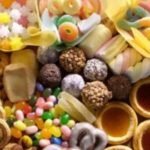
The same food habits that have made America the second most obese nation on the planet (after Mexico) are what is causing diabetes to reach near epidemic levels here. The remedy is mainly to go back to what we ate before we were derailed by bad advice from the government and other “experts”. Their misdirection led us to become addicted to fast acting carbohydrates (starches, sugars and sugary beverages). That stuff and alcohol now provide 30% of calories for the average American! In our Library read this article which shows which to foods to eat and which to avoid. The “goodies” in the picture above are obvious fast-acting carbs. But, as you read food labels, you find that so are ketchup, many ready to eat entrees, breakfast cereals and on and on. Learn more from my article on Diabetes and Weight Loss.

Magnesium is the nutrient insufficiency most associated with diabetes. Vitamin C has been shown to help blood sugar reactions. Exercise, of course, is preventive of diabetes and nearly every other complaint. Read about these motivators.

Pearls…of information

In the clinical nutrition seminars that I attend we are always happy when the presenter takes a break from some involved chemistry lecture and gives us “clinical pearls”. Those are tidbits we can put to use. I’ve gathered up a few items from the news and from last week’s interview with Bill Sardi.

  • There is a lot of information in the Immune Section of the HBN Library about preventing colds and flu and for dealing with them. I just added a very helpful article on that topic from Bill Sardi.
  • During last Saturday’s show, Mr. Sardi said in passing that when the eye doctor notices yellow deposits (Drusen) in the macula of the eye, it may be a clue that there is amyloid plaque in the brain (implicated in Alzheimer’s). I found this study.
  • We’ve mentioned several time on the show (and in last week’s blog) that supplements of IP6 help remove heavy metals, misdirected calcium, and excess iron. We also noted that has helped with cancer. Now a case report in a medical journal states that: “Inositol hexaphosphate [IP6] plus inositol induced complete remission in stage IV melanoma.”
  • When I was studying up on vitamin C, I was surprised to find a journal article suggesting that law enforcement and legal teams should be aware of the forensic potential of scurvy (low vitamin C). Vitamin C deficiency can mimic traumatic injuries and can be responsible for sudden death. Vitamin C deficiency is also associated with heart failure, rhythm disturbances and seizures.
  • Those who have been using Bill Sardi’s baking soda protocol may wonder about the effect on stomach acid we need for digestion. Yes bicarbonate neutralizes stomach acid, but we suggest taking it on an empty stomach at least 30-60 minutes before a meal. I take mine first thing in the morning.
  • A caller asked if it was okay to take vitamin K if you are on a blood thinning drug. Bill Sardi said that the warfarin and Coumadin type drugs are taken to reduce platelet clumping but they are vitamin K blockers. After 10 years on the drug, x-rays show calcification of the arteries because of lack of vitamin K which was needed to escort the calcium into bones. K also helps prevent wrinkles. (There are newer anti-clumping drugs that don’t block K.) Vitamin K comes from green leafy vegetables. He believes you should get a steady amount of K from food and supplements and have the doctor regulate the blood thinner dose accordingly around that. Natural blood thinners are fish oil, resveratrol, vitamin E, garlic. If there is an existing clot, the enzyme natto kinase might be indicated. Listen to my Dr. Anthony Thomas interview about vitamin K2. A great book on the topic Vitamin K2 and the Calcium Paradox: How a Little-Known Vitamin Could Save Your Life. An interview with the author LINK.

A Success and a Failure

😊 Glorious SUCCESS. During the December 15, 2018 radio program, Rosalind called Healthy by Nature. Two years ago, her husband was diagnosed with liver cancer. Based on information she learned from Bill Sardi, she began giving her husband IP6. She called the show to let Bill know that during a follow up appointment, the doctor could no longer find the liver cancer! Mr. Sardi said he often gets such reports. I have in fact seen grateful letters to him. One told of a person whose cancer had spread through the body. She was “fired from hospice” because she was no longer sick enough! She had been taking the recommended supplements (calcium, IP6, vitamin D3 and selenium).

Bill explained to our listeners that IP6 (from rice bran) binds up heavy metals (lead, mercury, cadmium, copper, and iron) which damage cells in our body. Iron is a double-edged sword, but most people are only unaware of its use in our blood to avoid anemia. However, in excess, iron causes premature aging and disease. Iron is stored in the liver where it can cause real trouble, but fortunately, IP6 chelates (or binds) it out. Mr. Sardi said that most men and postmenopausal females could benefit from an annual liver (and brain and kidney) cleanse with 1600 mg daily of IP6. (He does not sell an IP6 supplement or recommend any particular brand.)

😞 “Got Milk?” FAILURE. If you do have milk, I hope it has been fermented or at least ultra-heat treated. Too many mainstream diet dictocrats fail to include those qualifiers when they recommend that adults, children, and even infants drink cow’s milk. Those “experts” either have not done their homework or they have an economic interest in promoting common dairy. Unfortunately, we now know that untreated cow’s milk delivers disease-causing information to our genes. Human mother’s milk also carries gene-modifying messages, but, obviously, they are the ones nature intended.

I encourage everyone to read Bill Sardi’s article,Investigators Find The Genetic Delivery Man of Disease – And It’s In A Milk Carton.” He links to an extensive study documenting the problems. Normal pasteurization kills bacteria, but it does not rid milk of “exosomes” that carry the genetic messages…messages that can lead to obesity, diabetes, Alzheimer’s, cancer and Parkinson’s disease. Ultra-heat treating of organic milk gives it very extended “sell by” dates. It also eliminates the exosomes. Of course, that heat treating doesn’t keep people from being allergic to milk or from experiencing gastrointestinal problems due to the lactose sugar it contains. Milk that has been fermented into yogurt, kefir and real cheese is free of the worrisome exosomes and is often better tolerated by those folks. Just watch the added sugar in some fermented dairy products. After weaning from breast milk, humans do not need to consume milk. Other food sources of calcium include broccoli, almonds, dark green leafy vegetables, figs, seafood, oranges and beans.


Healthy By Nature Show